Not Just for Leaders: Designing Meaningful Careers for Specialists

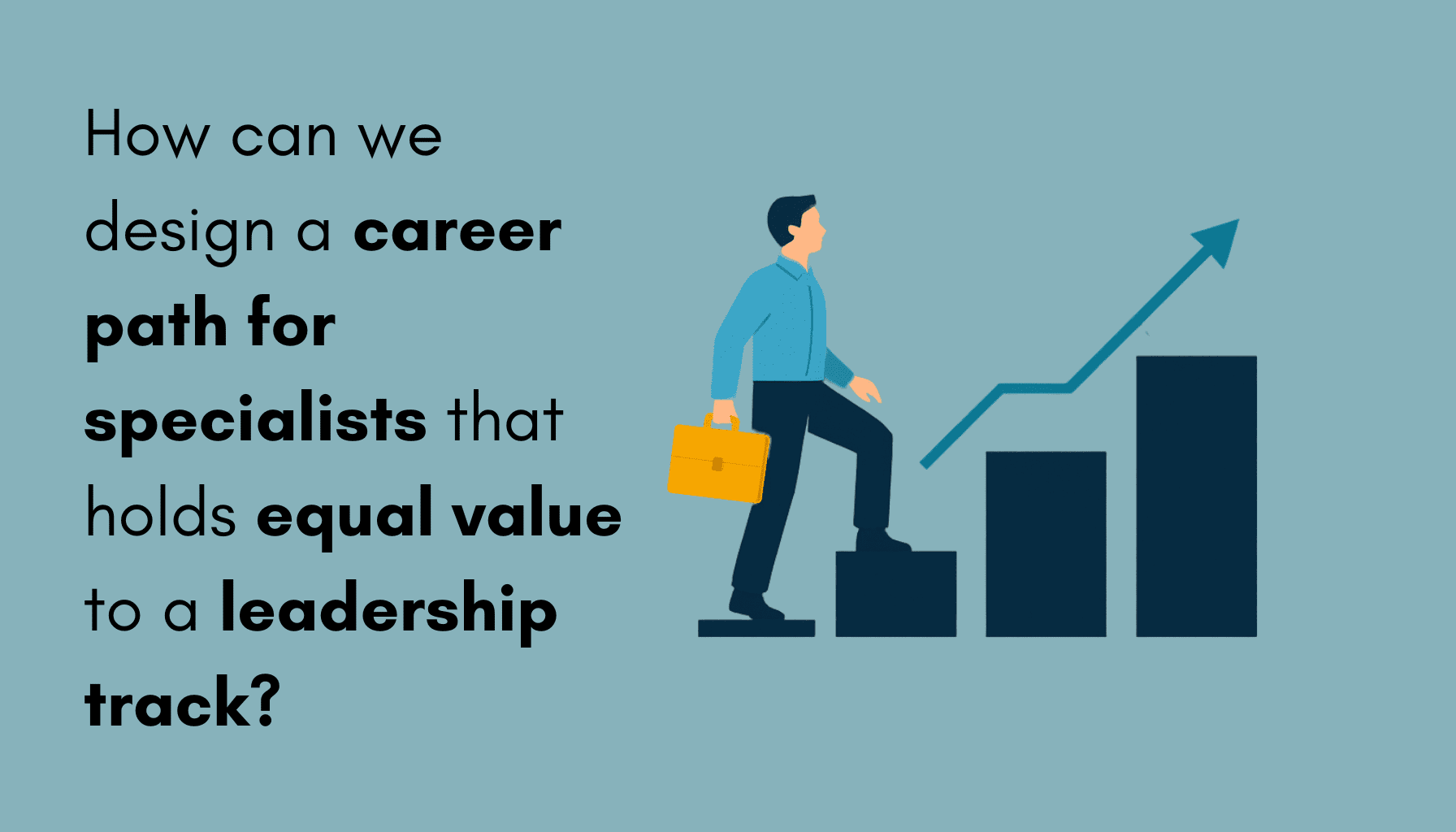
The Specialist Pipeline is a strategic framework designed to identify, develop, and advance specialists within organizations, addressing the evolving demands of modern, knowledge-driven environments. As traditional hierarchical structures give way to more agile and networked configurations, the role of specialists has become increasingly vital. Their ability to collaborate across functions and drive innovation is essential for maintaining a competitive edge.

Key Transitions in the Specialist Pipeline:

  1. From Professional to Knowledge Expert: This initial transition involves moving from executing tasks assigned by managers to setting personal goals and guiding peers. Knowledge Experts not only deepen their expertise but also mentor colleagues and represent their domain within the organization.
  2. From Knowledge Expert to Knowledge Leader: At this stage, specialists expand their influence by leading their area of expertise, managing stakeholder expectations, and driving change initiatives. They focus on achieving results through collaboration and strategic planning, moving beyond individual contributions.
  3. From Knowledge Leader to Knowledge Principal: Knowledge Principals operate at a strategic level, architecting their domain of expertise to create a sustainable competitive advantage. They lead innovation, influence organizational direction, and are accountable for long-term success in their specialty areas.

Benefits of Implementing the Specialist Pipeline:

  • Organizational Agility: By clearly defining specialist roles and expectations, organizations can mobilize their specialist workforce more effectively, fostering a more agile and responsive environment.
  • Talent Retention: Providing specialists with defined career paths and development opportunities enhances job satisfaction and retention, recognizing their contributions as distinct from traditional leadership tracks.
  • Enhanced Collaboration: Specialists equipped to operate across functions can break down silos, leading to improved innovation and problem-solving capabilities.

By adopting the Specialist Pipeline framework, organizations can better harness the expertise of their specialists, ensuring that critical knowledge is effectively leveraged to drive strategic objectives and maintain a competitive edge in today’s dynamic business landscape.

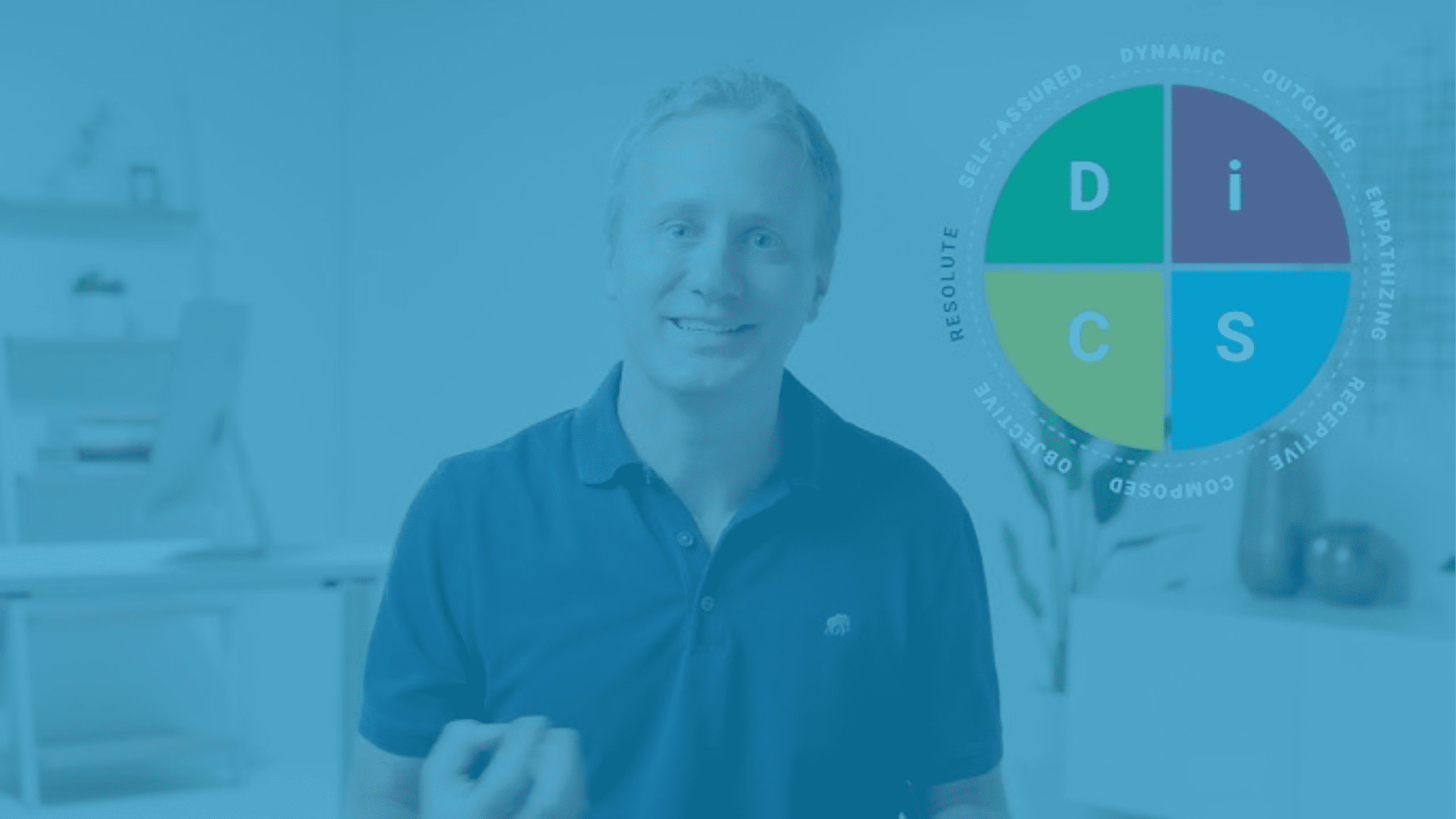
For a more in-depth understanding, you might find this interview with Kent Jonasen insightful.

The Value of Change Management Certification

Is certification really necessary? Doesn’t experience alone qualify us? Let’s explore the question—because the bottom line is that there are some definite advantages to receiving change management certification.

The value of certification

First, we can turn to the data. Participants in the Best Practices in Change Management – 2018 Edition were asked if they had attended a change management certification program, and more importantly, whether they would recommend that others become certified in change management.

90% of participants recommended change management certification, and here’s why:

  • Gain a structured approach – Certification provides a clear, formalized methodology and process for change management. It also provides a structured way of thinking and deepens your understanding of the dynamics of change.
  • Build skills and credentials – Certification increases professional credibility and is an important step for advancing your career. Certification also builds confidence in your ability to succeed at change management, and equips you with a variety of important skills that are applicable within and outside of change management settings.
  • Acquire common and universal tools – Certification provides tools, templates, techniques and exposure to methodologies, common practices, language and frameworks that you can immediately apply to change projects—all delivered by experts in the field.
  • More likely to achieve desired outcomes – Participants felt that by attending certification, they were more able to help their organizations recognize the value of change management and assist them in creating a standardized approach to managing change that increased proficiency and the likelihood of achieving desired outcomes.

Copy of EST Linkedin post template 4 Copy of ENG Linkedin post template 2 Copy of ENG Linkedin post template 1 Copy of ENG Linkedin post template

Change management training – what to expect?

Prosci goal is simple – to provide a hands-on approach to change management that enables you to apply practical tools, best practices, and appropriate models right away on your change project.

Important topics that are covered in the training:

  • The nature of change management – Certification provides an overview of what change management really is, why it needs to be implemented, what are the benefits of using it, and how it can increase the success of any project
  • Prosci ADKAR model – an overview of the five success factors of change (awareness, desire, knowledge, ability, and reinforcement) and how to achieve change acceptance
  • Prosci change management process and specific change management plans – communication plan, sponsors roadmap, resistance management plan and other managerial activities in the context of a change project
  • Applying tools to real change – various tools to evaluate change before implementation, such as readiness and impact assessment


As a bonus, upon completion, you can promote yourself as a qualified Prosci Certified Change Practitioner with this snazzy badge!

VILT Change Practitioner Certification V2 1add882f


Check out the next Prosci certification courses here.


Navigating Change with the help of DiSC

People often have very different needs, even in the same situation. As leaders and managers, it’s important to recognize that what we assume people need may not always align with their actual needs. If a manager has the capacity, DiSC can serve as a helpful guide, offering insights into what to be mindful of.

When managers truly understand what individuals need during pivotal moments like these, even a small, well-targeted action can have a significant impact on that person’s life.

Watch this 9-minute video by Wiley Research Director Mark Scullard to learn how different DiSC styles respond to change. You can also access this one-page training material on DiSC Style Needs During Times of Change here.


10 Questions Employees Will Have About any Change

Managing and supporting front-line employees through change is essential for the success of your project. To that end, equipping your managers and supervisors with the right tools is equally important. Training plans and communication outlines can get you moving in the right direction, but being prepared for the most common questions from employees will give your managers peace of mind.

Below are the 10 most frequently asked questions by employees about changes.

  • Why is change happening now?
  • What is the risk of not changing?
  • What is the rush?
  • If I wait long enough, will the change just go away?
  • What will the change mean to me?
  • What are my choices?
  • What are the benefits of supporting the change?
  • What if I disagree with the change?
  • What if they have tried before and failed?
  • What if I am forced to do more for the same pay?

Answers to the 10 most common employee questions

The questions and answers below provide a basic foundation for a face-to-face question-and-answer session between a supervisor and their employees. Each answer is more powerful and effective when supervisors combine the basic answer with company-specific information and data as it relates to the change—essentially customizing the answer for their organization.

The questions and answers are all part of building awareness among employees. Lack of awareness is often the number one cause of change resistance among employees, yet it is the easiest resistance point to fix.

It may not be just one question that provides the answers employees are looking for and it may not be the same set for each employee, but the following questions and answers will get you on the road to building awareness among employees.

1. Why is change happening now?

You may feel like change is happening suddenly and that it is directed right at you. In reality, most changes begin outside the company many months or even years before internal changes take place. Research shows that most major business changes are a response to changes in the external marketplace.

These external marketplace changes can result in:

  • Loss of market share (your company is losing money)
  • New offers or capabilities by competitors (they’re creating new business faster than your company)
  • Lower prices (their cost of doing business is lower, resulting in better prices to their customers)
  • A new business opportunity for growth

External business drivers take time to set in. If they have already affected the bottom line of your company, change is needed immediately. In some cases it is already too late—the internal change should have started much sooner.

2. What is the risk of not changing?

When external marketplace changes become apparent inside the organization, managers suddenly realize the risks of not changing.

For businesses, the risk of not changing could mean:

  • Loss of jobs (even at the executive level)
  • Failure in the marketplace
  • Bankruptcy or loss of revenue

For employees, the risk of not changing could mean:

  • Job dissatisfaction
  • Fewer promotional opportunities
  • Lower job security in the long term
  • Immediate loss of employment

3. What is the rush?

Employees usually find out what is happening after the fact. Organizations do not always share financial information or talk about poor performance issues with employees. Therefore, when change is needed quickly, employees may be taken by surprise.

On the one hand, organizations are trying to implement change as quickly as possible. On the other hand, employees are one step behind trying to understand why the change is needed and how they will be impacted.

Unfortunately for the company, most employees are in no hurry to change. In fact, many employees may not see the need to change at all. Forcing employees to change when they do not understand the business reasons can be a lot like pushing a giant cube of Jello—you might have an impact, but no real overall shift occurs.

When the force is removed, everything returns to the way it was before.

4. If I wait long enough, will the change just go away?

If financial success of the organization depends on change, then you can expect the change to happen with or without you. Waiting will usually not change the outcome.

In most cases a company will change, even in the face of resistance from employees and especially if financial success is at stake.

This does not imply that change will be bad for you. In the end, many changes result in positive outcomes for employees. Benefits might include better tools, improved work processes, more secure jobs, and new opportunities for you to advance your career.

5. What will the change mean to me?

Change to a business can include:

  • New ways of doing work
  • New systems or tools
  • New reporting structures
  • New job roles
  • New products or services
  • New markets or geographic locations

How will the change impact me? That depends on your current job, the extent of the change, and the choices you make in response to the change.

With small changes, you may not be impacted at all. With major changes, you may be doing new work, using new tools, or reporting to a new manager. With radical changes to the business, some employees may work in other departments or even move to other companies.

When the change is implemented, each person will be affected differently. In the end, how you react to the change plays an important role in how the change will impact you.

The good news is: The actual impact of the change on you is directly related to how you react to the change.

In other words, you are in control of how you respond to change. Better yet, how the organization views you and your future role in the company may depend on your response to change and the choices you make.

6. What are my choices?

Your choices about how to respond to change will vary as the organization moves through the change process. Think about the change in these time periods:

  • When the change is first announced – but before the change is implemented
  • During the change process – when the new solution is being deployed
  • After the change is in place – following the implementation of the solution

Your choices and their consequences depend on the phase of change you are experiencing. In some cases, choices you make may have negative outcomes. They may be bad for you and for the organization. Other choices you make will benefit you and enhance your ability to thrive in a changing organization.

7. What are the benefits of supporting the change?

The benefits of supporting the change, especially changes that are critical to the success of the organization, include:

  • Enhanced respect and reputation within the organization
  • Improved growth opportunities (especially for active supporters of the change)
  • Increased job satisfaction (knowing you are helping your organization respond effectively to a rapidly changing marketplace)
  • Improved job security

8. What if I disagree with the change?

What if I feel they are fixing the wrong problem? Be patient. Keep an open mind. Make sure you understand the business reasons for the change. However, don’t be afraid to voice your specific objections or concerns. If your objections are valid, chances are good they will come to light and be resolved. If you feel strongly against a specific element of the change, let the right people know, and do it in an appropriate manner.

9. What if they have tried before and failed?

The history of your company may include some previous change projects that failed. If failure is what employees are accustomed to, the organization will have a hard time erasing the past. For companies to be successful, everyone must be prepared to accept the past as history and focus on what lies ahead.

10. What if I am forced to do more for the same pay?

When your organization is undergoing a change, this usually means that new processes, systems or skills are required. Your role in the changed environment may include learning these new processes or acquiring new skills. Indeed, some of your responsibilities may change.

For the old way of doing things, compensation may actually decrease as the value of that work to the organization goes down. However, compensation for new work may increase as the value for new services and products increases. This is a part of change.


This blog post was originally published by Tim Creasey in Prosci blog.

Learn more about Change Management in practice from here.


Do you know your people numbers?

We usually know very well EBITA, profit, cash flow etc, BUT:

  • How many leaders do you have – let’s say 30 
  • What is the turnover rate – let’s say 20% 
  • How many replacements are needed per year – 6
  • What is the cost of one replacement – 6-9 months salary 
  • What is the average cost of replacement of one leader – calculate yourself 🙂 

How long does it take to develop a specialist to a well-functioning leader? It’s definitely not a matter of days or months, can take years of practice

We know that:

  • We should look at our people as the most important asset
  • We should have a system at place how to plan, track, operate and upgrade our asset according to business needs

How do we do it? Usually offer training. And we have experienced that it usually has only short-time effect on motivation and does not influence much above-mentioned numbers.

This is what Leadership Pipeline can be for your organization – a framework to enable clarity, effectiveness and continuity in your people business.


Read more about Leadership Pipeline HERE.

From Technical Expertise to Strategic Mastery: Progressing Through the Leadership Pipeline

Leadership ranks as one of today’s foremost challenges. Every organization, regardless of size, must tackle this issue. Typically, a leadership crisis reflects a systemic failure within the company rather than just the shortcomings of an individual. A critical element of leadership culture involves the process of development and succession.

The four steps, or transitions, in Leadership Pipeline mark significant milestones in a leader’s career. Understanding these transitions, along with the challenges they present, is crucial for organizations aiming to establish a solid leadership culture. It also equips the organization to effectively manage changes and challenges in the business landscape.

THE FOUR STEPS OF THE LEADERSHIP PIPELINE MODEL

Each stage is designed to help leaders develop the skills needed for the next role, ultimately preparing them to take charge of the organization.

Step 1: Managing self to managing others

The initial phase targets employees who have minimal leadership experience. These individuals typically possess strong technical and professional capabilities yet may lack advanced interpersonal skills crucial for leadership roles.

Once these employees become proficient individual contributors and start showing an ability to work collaboratively, they often receive additional responsibilities. Successful management of these duties, along with adherence to company values, typically leads to promotion to first-line managers.

The transition may appear straightforward but can be surprisingly challenging. The shift required at this stage is from a self-centered approach to appreciating the importance of leadership and teamwork. While first-level managers continue to handle individual tasks, they must begin transitioning their mindset towards managing others instead of just themselves. High performers, in particular, may resist changing the behaviors that initially brought them success. Consequently, many transition to managerial roles without a real shift in behavior or values, essentially becoming managers in title only.

The most challenging aspect of Step 1 is the change in values. Managers must learn to value and prioritize their managerial duties, understanding that these responsibilities are essential to their success and not just tasks to be tolerated. Assessing changes in values is more complex than observing changes in skills or time management. True value change requires reinforcement from upper management and success in their new roles to cement the new values.

Step 2: Managing others to leading managers

The second step in the Leadership Pipeline is critically neglected by many organizations, despite its importance in building the company’s management foundation. In this role, managers are responsible for selecting and developing future leaders, a task that forms the core of an organization’s leadership capabilities.

The primary focus at this stage is on the skills necessary for evaluating and selecting candidates for first-level managerial roles, providing them with the necessary support and guidance, and monitoring their development. Essentially, first-level managers transition to becoming mentors in the second step, which is pivotal for the leadership pipeline to function effectively.

Despite its importance, few companies adequately address this step in their training programs. At this stage, managers must shift entirely from individual tasks to managing only. They need to master key skills such as selecting individuals, delegating leadership tasks, tracking progress, and offering coaching. Moreover, managers at this level must broaden their perspective to include broader strategic issues affecting the business.

A significant issue is that managers promoted directly to managing other managers without properly transitioning through Step One can clog the leadership pipeline. They may continue to hold first-line managers accountable for technical rather than managerial tasks and instill inappropriate values in their subordinates. Managers in this role must also identify and address any resistance to managerial roles among first-line managers, ensuring that those who prefer individual contributions over leadership are reassigned, rather than allowed to obstruct the pipeline.

Furthermore, coaching is crucial at this level but often overlooked. Many first-line managers lack formal training in management, relying instead on their superiors for on-the-job guidance. However, the ability to coach effectively is not always recognized or rewarded within organizations, leading to a deficiency in initiative and accountability among specialists and first-line managers. This oversight can significantly impact the effectiveness of the leadership development process.

More time

Step 3: Leading managers to functional manager

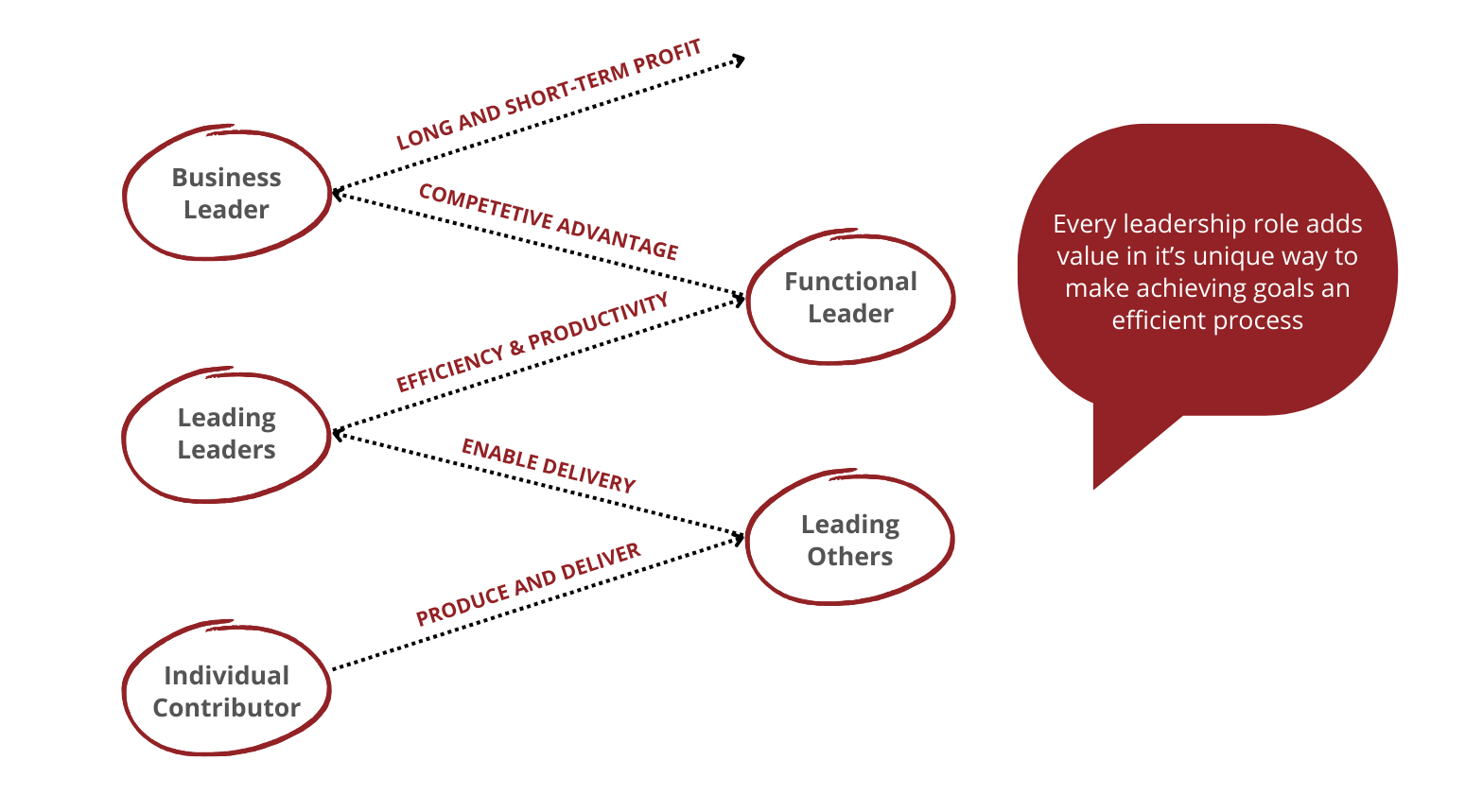
Transitioning to a functional manager role involves significant changes, primarily centered around enhancing communication skills and developing a broader organizational perspective. Functional managers must excel in understanding diverse needs across the organization and adopt a “big picture” approach, which is crucial for crafting long-term strategic plans.

“Managerial maturity” is a key attribute for functional managers. This maturity is characterized by the ability to formulate strategies that outperform competitors, thus providing the organization with a sustainable competitive edge. Functional managers must look beyond immediate challenges to devise long-term strategies that improve their function’s performance relative to the competition.

The role requires navigating complex communication channels, as functional managers must interact through multiple layers of management. Skills in team collaboration with other functional managers and strategic resource allocation are essential. Additionally, these managers must integrate their function’s strategy with the broader business strategy, often necessitating participation in business-team meetings and less time spent on direct functional tasks.

Ultimately, succeeding as a functional manager demands a shift in thinking—from being a member of a function to leading it, with a focus on long-term, innovative strategies that secure a sustainable advantage for the organization. This stage challenges managers to expand their strategic thinking and operational scope, pushing them to lead their functions into future-oriented growth.

Step 4: Functional manager to business manager

In the fourth Step of their leadership development, managers face a significant shift as they transition into the role of a business manager. This stage is characterized by increased pressure and autonomy, requiring managers to possess genuine leadership qualities and an ability to perform under heightened expectations.

The development focus for business managers is on enhancing their ability to manage diverse teams effectively and inspire their members. A deep understanding of emotional intelligence is crucial, enabling managers to connect with employees on an emotional level and better understand the dynamics between different functions within the organization.

A key challenge for business managers is making strategic decisions that balance the organization’s immediate needs with long-term goals. This involves not only ensuring smooth operational functionality but also meeting financial targets that will influence future profitability.

Business managers spend much of their time reflecting on and analyzing the organization’s past, present, and future performance, moving away from direct resource allocation to more strategic considerations. They must be open to trusting and receiving feedback from functional managers across different areas, even those they are unfamiliar with personally.

FINAL THOUGHTS

The Leadership Pipeline Model is a strategic framework aimed at fostering leadership development from the early stages of an employee’s career. It emphasizes the importance of nurturing potential leaders by providing clear transitions from managing oneself to managing others and beyond.

This model facilitates the growth of internal talent, reducing the need for external recruitment and significantly enhancing the success rate of leaders within the organization. It also provides clarity about the content of leadership jobs and responsibilities of different roles thus enabling smooth and efficient collaboration and value creation in entire organization. By focusing on strategic thinking and value-based decision-making, the Leadership Pipeline Model can markedly differentiate successful companies from those that fail.

Used sources:
BUILDING LEADERS AT EVERY LEVEL: A LEADERSHIP PIPELINE, by: Stephen J. Drotter, Ram Charan, Ram Charan
The Leadership Pipeline Model: Building the Next-Generation Leaders, by Martin Luenendonk

Developing a Leadership Pipeline

The Leadership Pipeline Model is focused on developing a structured framework for fostering leadership skills across various organizational levels. It assists organizations in identifying and nurturing potential leaders, ensuring that their growth is in line with the organization’s goals.

LPI tasandite joonis ENG

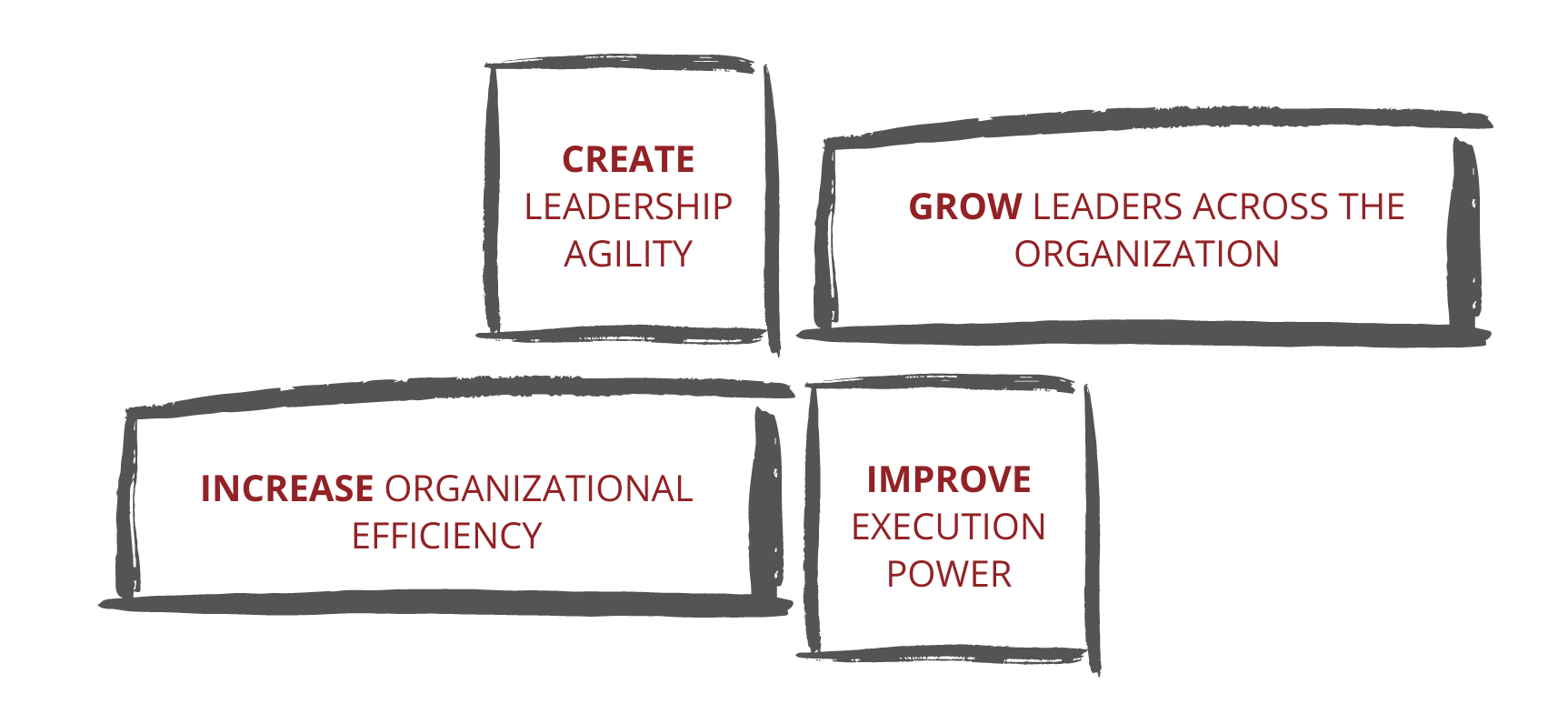
The model is particularly effective in creating a sustainable leadership culture, where leaders are prepared for the challenges of their specific roles and the future needs of the organization. Leadership Pipeline framework will help you:

LPI framework will

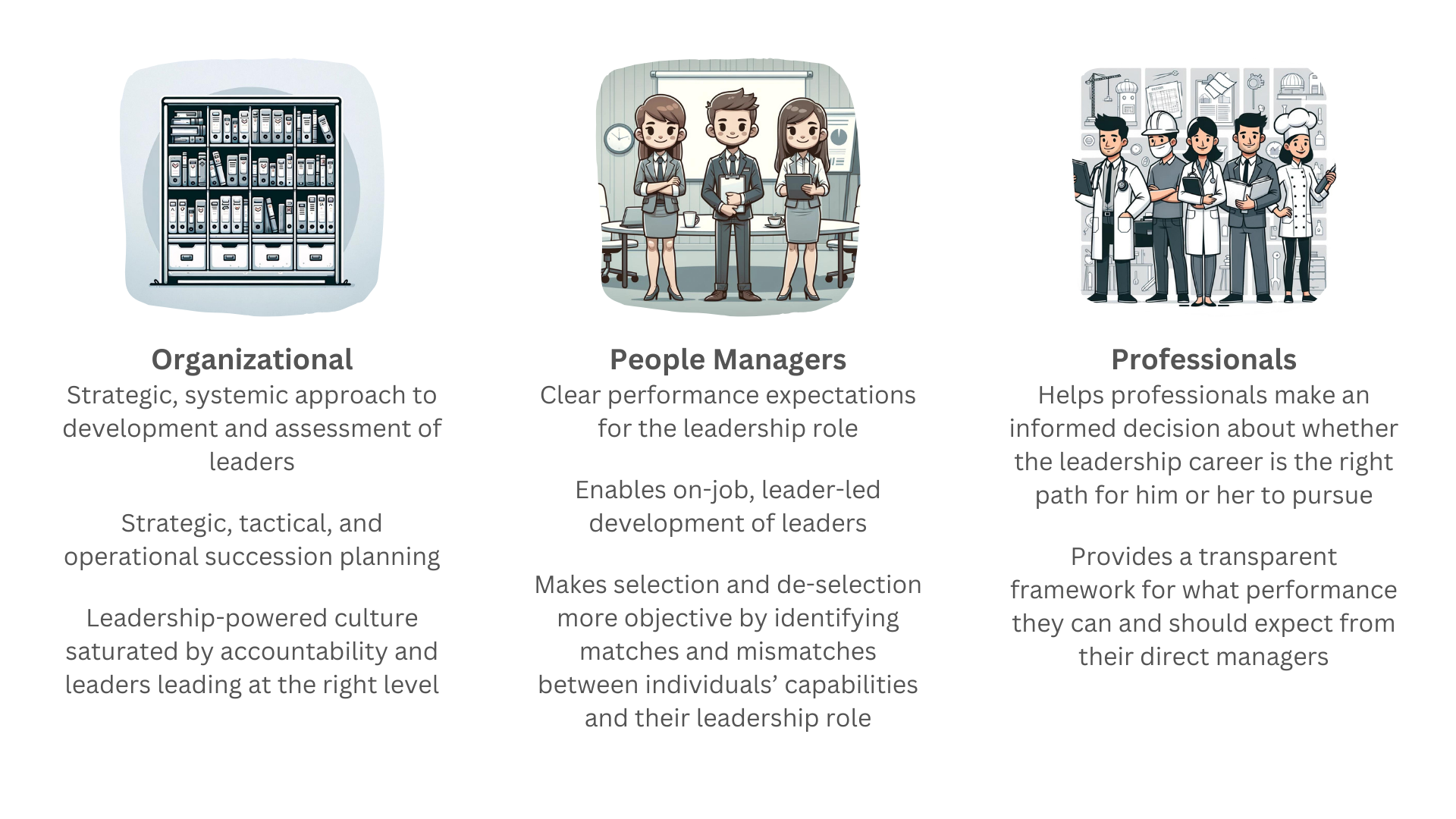
The impact of working with the Leadership Pipeline principles will be significant. Not just for the leaders in question but for the entire organization.

Value proposition

LPI model distinguishes the skills, time allocations, and work values required at each leadership tier, allowing for a more targeted approach to developing leaders. The combination of those 3 elements increases the likelihood that learned skills will be put into practice because clear role-based expectations make it evident what needs to be done to achieve results together with the team.

For each leadership role the combination of work values, time application, and skills are different – to act by role expectations some old behaviors need to be skipped, some changed, and some new ones will be added. Based on the experience of the majority of organizations worldwide it is seldom an intuitive process, yet usually, no help or guidance is provided for leaders transitioning into new roles.

An Introduction to the Leadership Pipeline Model

Implementing Leadership Pipeline principles can vary in approach, and each organization has its unique optimal starting point. We collaborate with your organization on your preferred terms, initiating the process where it’s most crucial for you.

If you want more information on how to create an internal management support system and develop leaders, look here or book an appointment for a free consultation here.

Leadership Pipeline principles are spreading – Change Partners now active also in 🇱🇻 Latvia!

We gladly announce that  and  have joined  to promote ® (LPI) solutions in Latvia 🇱🇻.

Change Partners helps companies to achieve desired results at every level of management throughout the Baltics.
The Leadership Pipeline offers first principles for mapping and building an efficient and agile leadership architecture, infrastructure, and operation model in smaller as well as in bigger businesses. LPI solutions are 56% better at creating lasting behavioural change for leaders and it’s proven by leading third-party training auditor since 2009 based on more than 10’000 measurements.

Inga and Regina are both experienced leaders and trainers.
🆕 Inga Kalna delivers Leadership Transition Programs across the Baltics and Scandinavia for the last 10 years. Before joining Leadership Pipeline Institute, Inga has more than 15 years of experience in the banking sector. Thanks to her various roles, she has gained solid expertise in business development, change management and leadership development.

🆕 Regina Reke has provided LP trainings since 2020. She speaks five languages and delivers Leadership Transition Programs in Latvian, Lithuanian and English, enabling companies in 🇱🇹 Lithuania or 🇱🇻 Latvia to organise learning process in their native tongue, while for mixed Baltic groups – in 🇬🇧 English.
Before joining Leadership Pipeline Institute, Regina has been actively involved for more than half a decade working as a business trainer and consultant. Her more than 15-year experience in diverse industries (transportation, travel, construction,) in leading positions, has built substantial know-how in leadership and business development.

Together we can really leverage your company’s competitive advantage!

Cooperation with the Leadership Pipeline Institute

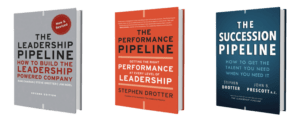
Leadership pipeline books

We are pleased to announce that in 2021 we started cooperation with the Leadership Pipeline Institute in Denmark, which allows us to bring a globally recognized Leadership Pipeline framework to our customers.


Imagine a company that has a CFO but does not have a budget process and no accounting system. In such circumstances, it is difficult for a financial manager to succeed. Financial processes create clarity and certainty, financial matters are under control and problems are easy to talk about.

Less attention is paid to the fact that management itself is one of the functions that ensure the success of the company and needs also an internal system. Usually, management is considered a general topic, for example, it is discussed whether Rein is a good leader at large, but the data is insufficient to make such an assessment. At best, there is annual employee feedback. This is one reason, why the efficiency of management training is low, as a rule, less than 15%.

The Leadership Pipeline approach helps to create an internal management system that recognizes the value created by each level of leadership and formulates specific behavioral expectations to get the job done. This provides an opportunity to select, assess and develop performance on a specific basis. Rein can be a good leader of others but may not want to do the job of leader of leaders. Mihkel is an excellent functional leader, but in order to develop into the role of a business leader, he should work more with some skills. And no one has to feel bad about it. Because everybody knows the value that each level of management creates and what needs to be developed in order to move to the next level.

The Leadership Pipeline framework provides a common language and a common understanding of what needs to get done and by whom, helping to solve problems, make decisions, and use opportunities across the organization. The whole value chain will work more efficiently. The head of the company can deal with strategic issues and communication with various stakeholders, as the leaders in his team develop their areas, cooperate effectively with each other, and manage the implementation plans. There is an overview of succession available for each level, as managerial work and the necessary skills are regularly monitored and developed across the organization.

If you want more information on how to create an internal management support system and develop leaders, look here or book an appointment for a free consultation here.

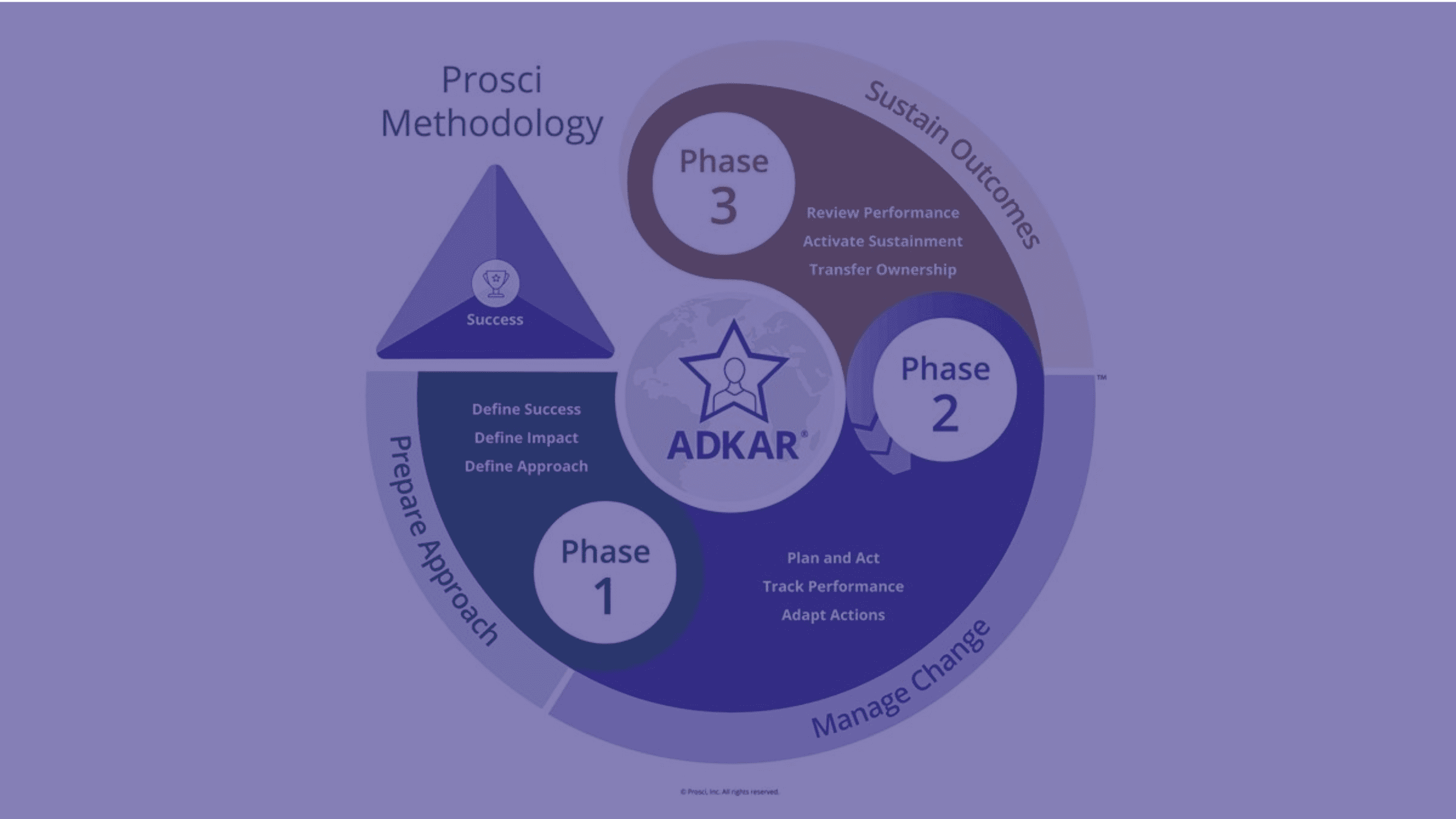
Prosci Methodology Enhancements

Prosci is committed to continually searching for better ways to manage the people side of change.

Part of Prosci’s promise is ensuring that they provide the most up-to-date thinking, research and models within their programs. Each year they release updated content, program design, research and tool enhancements. This year’s updates are some of the most robust Prosci has ever produced.

They listened to the Prosci Community and, using a Design Thinking approach, began collecting information to empathize and understand the needs and problems of change practitioners. They used the data to define their focus and concentrate efforts to address the most urgent, pervasive and high-value issues for practitioners.

The core of the Prosci Methodology is still the same, but the enhancements driven by your input have created a more effective, applicable, and actionable methodology. Download this guide first for an overview of what is changing and how it impacts your role, as you interact with the content. 

Use the resources below to review the core content of the Prosci Methodology

Read these articles to learn about key concepts of the Prosci Methodology. These articles do not compare the legacy and updated models and methodology, but they will provide a clear overview of the current thinking. Once you read through the overview guide, download our FAQ document for additional information.

Watch these webinars for an even more in-depth explanation of these key concepts.

If you’re ready to upgrade and want to refresh your Prosci change management knowledge and license, then our Prosci Refresher Program is exactly for you. Read more from here.


Using DiSC for the People Side Of Change Management

Organisations are constantly undergoing change. Whether organization is implementing a new strategy and culture or responding to market trends like digitalisation, change is a necessary and vital part of long-term organisational success.

Yet, all too often, people react to changes so differently. Have you ever wondered why? What are some of the change management strategies to handle these various reactions? One of the reasons that change efforts fail is when leaders fail to take the human side of transition into account.

In the landmark change management study of more than 100 companies over 10 years, Harvard Business School professor John Kotter, reported the incredible finding that approximately 70% of change initiatives fail. Whether it was a large scale or a smaller scale change, it often failed to achieve the necessary commitment. This is where DiSC® assessments can help.

Using DiSC psychometric model to understand these differences along with Prosci® change management tools will go a long way to facilitating change and managing people more effectively.

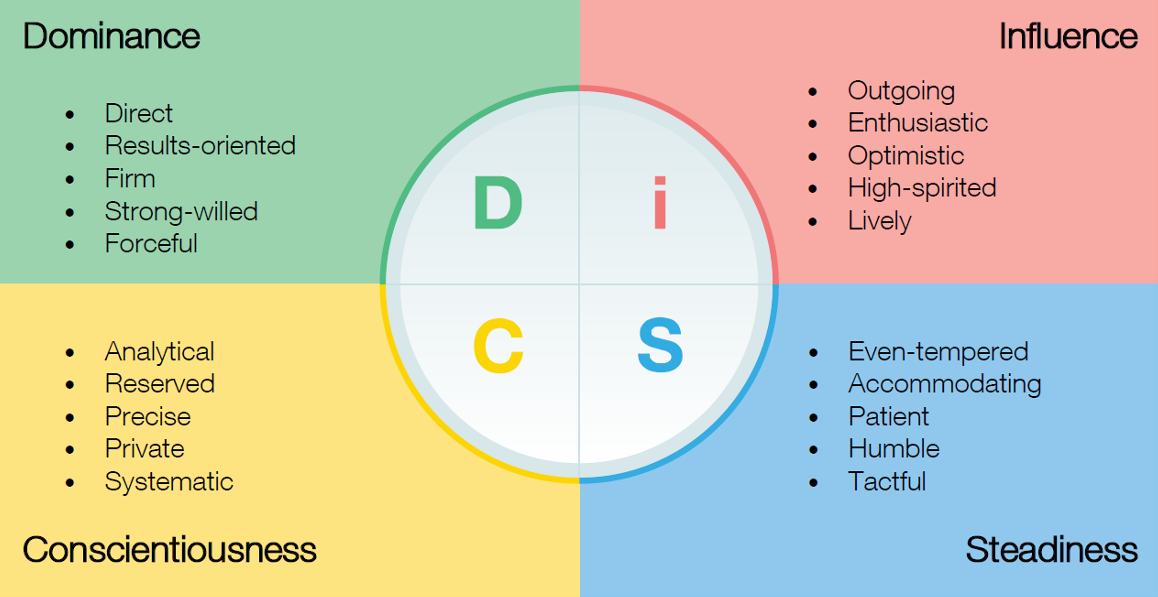
The DiSC model is constructed on two behavioral dimensions which form four basic profiles. Each profile, or behavioral prototype, describes preferred environments, communication styles and workplace relationships. The profiles also indicate the greatest fears, motivators, stressors and attitudes toward change.

disc model english

Without thoughtful leadership to manage personalities within your team, changes can become much more difficult on people and will ask a lot from leaders.

One of the most frustrating things for leadership can be employee resistance to change. “Why can’t they just get on board and do what’s needed to get this initiative done?”. But that would be too easy…


Importance of understanding other personalities

During change, the emotional intelligence of yourself and others is critical for:

  • Keeping employees engaged and productive
  • Decreasing resistance, stress and conflict
  • Maintaining the quality of services that customers need and expect

Using the DiSC Profile can be a very powerful tool to carefully assess people on key change competencies.  Not all people embrace change with the same level of enthusiasm. A percentage of the population will dread the prospect of change, while others cynically deny that change will actually ever happen.

By understanding what DiSC styles are more represented in the organization we can predict the potential success or failure of change initiatives and anticipate if they likely will either positively or negatively impact the change process. Ignore these issues, and the probability of delay and change failure increases.

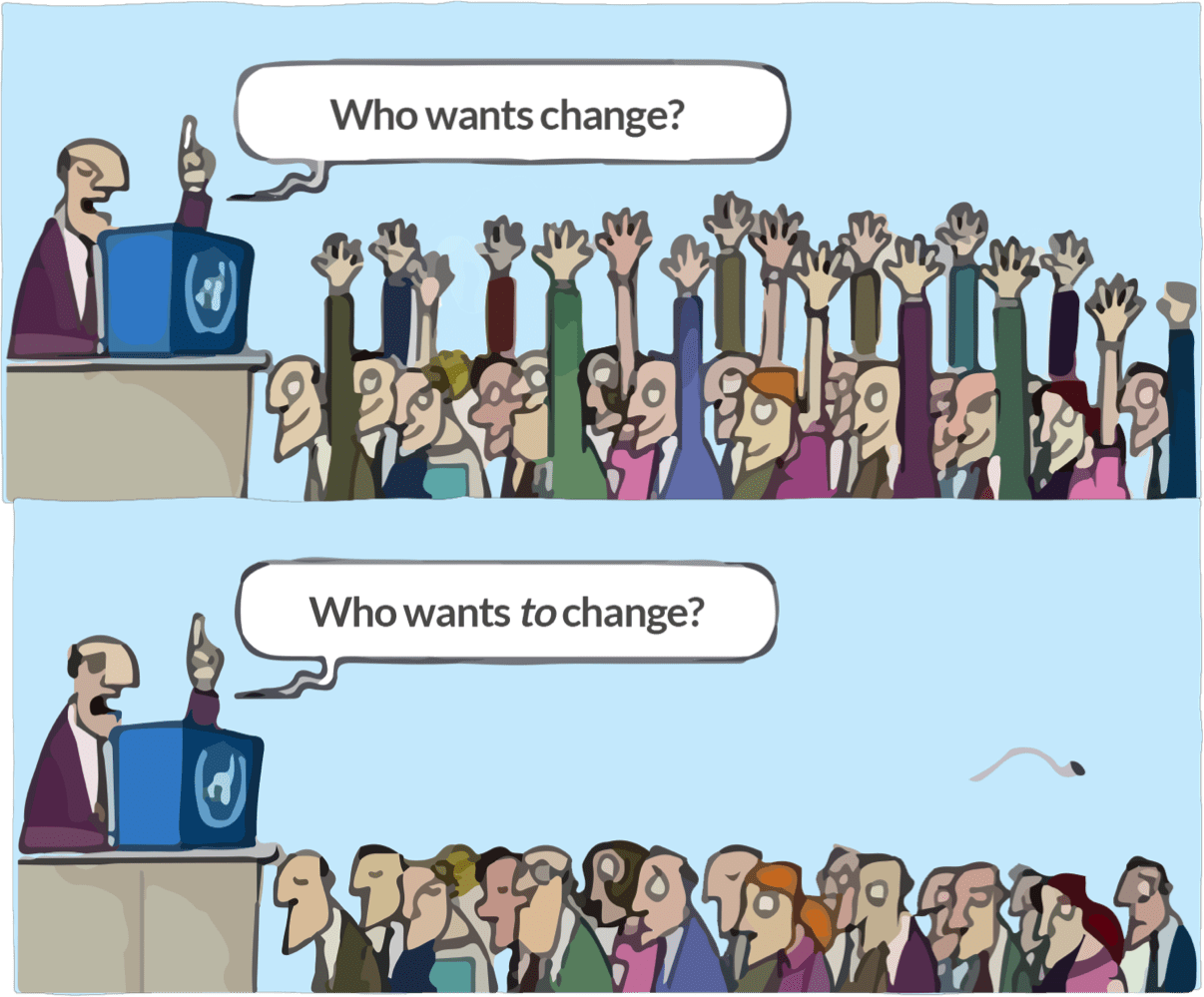
When planning the change process, develop a richer, multidimensional picture of employees and how they view change.  Remember the adage, “We love change, as long as someone else does it!”  That simple picture speaks volumes.

change

DiSC helps to develop a deep understanding of each person’s motivators, their limitations and their challenges. Be realistic about what to expect from each individual dealing with the change process. Then, plan accordingly.


Change management for High D’s


1High D’s make quick decisions, are on board with change easily and are happy to move forward towards a goal. They are daring and risk-takers. They can be innovators who love new ideas. On the surface, this is a wonderful asset, and momentum is needed to drive change, but they sometimes don’t wait for all the details of a plan before they act. High D’s tend to have a hard time tolerating the conversations necessary to construct the execution plan. This can negatively impact the team’s ability to reach its goals. It’s important to give them an immediate task they can accomplish right away that is part of the larger plan so they can act quickly and achieve a win early in the change process.


 

What does the D style need during times of change?

ddd

Progress: being able to get results quickly and efficiently

Control: having influence over decisions that affect them and their success

Justification: knowing how and why changes were made


Change management for High i’s


2High I’s usually get excited about the initiative and want to talk about it. They show great enthusiasm and are early adopters of an initiative. I style openly share their ideas and are usually fun to work with. The challenge with high I’s is focusing them during the execution phase and not letting them get sidetracked chasing the next idea that excites them. Strategies for this group are games, themes and smaller goals that engage their desire for stimulation. They also make great advocates of the initiative. Use High I’s to inspire other members of the team who may need additional encouragement to get on board.


 

What does the i style need during times of change?

iii

Excitement: being part of energizing new opportunities

Being heard: knowing that their opinions and feelings about the change(s) are heard

Relationships: maintaining a connection with important people in their world


Change management for High S’s


3High S’s can be challenging on the surface because they don’t fundamentally like change. They like the status quo that is predictable and calm. “If it isn’t broke, don’t fix it.” It’s important to involve them as early as possible in the change process to allow them time to get used to a new idea. Although initially they can be frustratingly slow adopters, this group can become your best advocates for an initiative once they have time to understand the logic behind a change and they feel engaged in the change management process and their role in it.


 

What does the S style need during times of change?

SSS

Reassurance: knowing that things are under control and will turn out okay

Harmony: freedom from tension, conflict, and ongoing stress

Direction: knowing where we are headed and what is expected of them


Change management for High C’s


4High C’s have excellent analytical skills, are superb at knowing the details and are very systematic and careful in their work style. They will catch mistakes and keep the team honest when reporting stats and results.  The challenge with this style is that they need all the details upfront, and their questions and feedback can come across as resistant and negative.  It’s important to learn to embrace these qualities and use them to enhance the team by asking them to help in creating a detailed execution plan. This group may need to be encouraged to move toward the bigger goal, but C’s are an invaluable resource to a team’s success.



 

What does the C style need during times of change?

ccc

Competence: knowing that they can do their jobs well and maintain credibility

Understanding: knowing the implications of the change(s) and maintaining their expertise

Stability: having a sense of predictability and freedom from chaos


Are these generalities? Yes. And every person and organization is unique. But, the more the leaders understand behavioral styles, the more they can work within each person’s zone of strength to position the team for success in managing change.

Multidimensional communication is always the key to change project success. Business leaders cannot effectively manage and clearly communicate changes without understanding the personalities of their people and the motivators behind them. DiSC along with ADKAR creates a powerful language for change management and gives leaders a framework for helping people embrace and adopt changes through effective communication and better self-control. Embracing change means putting people first.ccc 1


WHAT’S YOUR DISC PROFILE?

Reach out to us at info@changepartners.ee to get your personal DiSC profile today to learn about your own DiSC style.


Referred sources:

https://ipbpartners.eu/en/whatisdisc/

https://www.assuredstrategy.com/change-management/

https://www.linkedin.com/pulse/disc-profile-3-ways-align-people-change-process-joanne-flynn/

https://discprofiles.eu/disc/


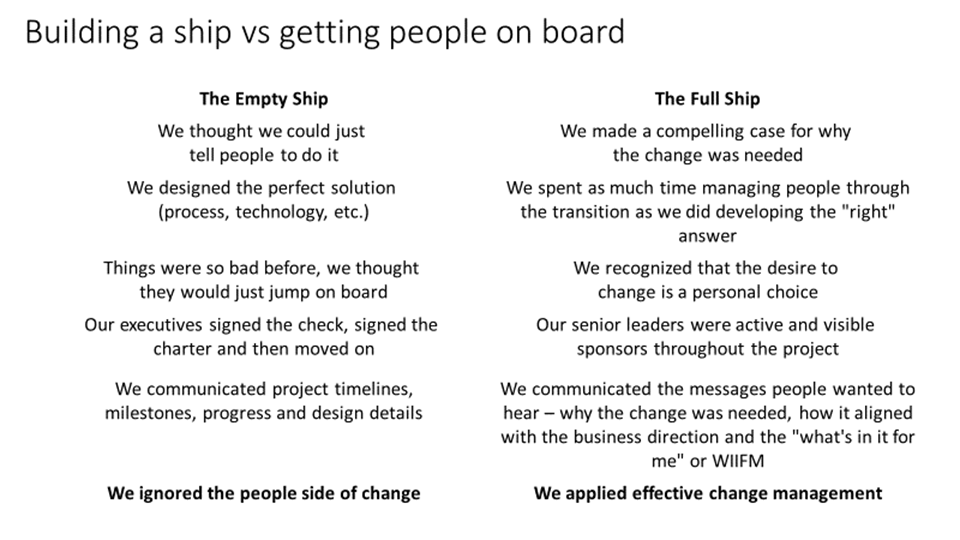
It takes more than building a beautiful ship

Changes ultimately come to life through the individuals who have to do their jobs differently as a result of a project or initiative. Whether the project involves a process impacting 15 people, new technology impacting 150, or a transformation impacting 15,000, the success of the project is inextricably linked to the success of each of those individuals. Did they get on board, or did they stay on the shore? 

To help visually depict this, imagine two ships: one where the people’s side was managed effectively, and one where it was not. In both cases, a beautiful ship was constructed, and it now needs a full working crew. However, one ship was left isolated and empty while the other ship was full of life and people who “got on board.” Below are the types of things you might hear from a project leader in each situation. 

Think about the projects and initiatives you’ve supported - 
have they been more like the comments on the left or the comments on the right? 


image001

It is your choice: Have you done what is needed to get people on board, or have you just built a beautiful ship?


*Adapted from an original blog post by Tim Creasey, Prosci.com


Fresh Teamwork Research: State of Teams

The way we team is more important now than ever before.

Read the latest research report from Wiley to understand the challenges teams are facing today and how The Five Behaviors® could be the solution for building truly cohesive and effective teams.

State of Teams is a great resource regarding the need for strong teamwork skills in today’s work landscape. The report covers new research from Wiley conducted in the last two months on the dynamic nature of teams in today’s workplace, based on insights from over 20,000 employees.

Screenshot 2020 05 18 at 11.25.07

Today’s teams are more complex, fluid, and dispersed

The study shows that teams are becoming more complex, more fluid, and more dispersed—and that our working lives are becoming more team-oriented than ever before. Today’s teams are more complex:

  • Employees work on more teams with more people on a daily basis compared to just five years ago.
  • 76 percent of employees are part of at least two teams within their organization.
  • Directors and execs are often on more than five teams.

Today’s teams are more fluid:

  • 73 percent of people are on more than one type of team.
  • 62 percent are on project-based teams, most often lasting just a few months.
  • 41 percent have worked on teams with consultants and temporary contractors.

Today’s teams are more dispersed:

  • In the past year, 28 percent of respondents have worked with at least one member based in another country.
  • 51 percent have worked on teams with at least one member who collaborated virtually.

Read the full report here.

Change Partners Co-Founds Europe-Wide Change Competency Builders Network

Change Partners joins forces with 7 other European Prosci partners to form the network of The Change Competency Builders.

Why we think it will be beneficial to our clients?

In Europe there are many companies that have sites in multiple countries, that could be serviced more consistently in applying change management. This new partnership will enable our customers to drive change globally, while building change competency locally. The network will have ability to provide localized services to clients in 20+ European countries: Germany, Austria, Switzerland, Scandinavia, Netherlands, Belgium, Poland, Czech Republic, Ireland, the Baltics, Finland, the Balkans, Romania.

We will accelerate the human factors in the organisations’ change initiatives:

  • Speed of adoption: we will increase the speed of adoption by providing a market-recognized global standard, together with country based consultancy
  • Ultimate utilization: we will facilitate an organization to implement faster and on a larger scale consistently because we provide the same method and tools at any site of the organization
  • Proficiency: not every site will have the same challenges, our network can tailor the Prosci approach site wise and when needed in local language with local flavor

Read more about CCB.network on our website.


Equipping Organizations for Rapid Change


Article by Michelle Haggerty – COO of Prosci

Sometimes we change because we want to. Sometimes we change because we have to. Due to COVID-19, people and organizations around the globe are adapting to involuntary changes of all kinds. How we choose to use this time will determine how we can grow from it.

FORCED CHANGE AS A DEFINING MOMENT

Part of my role is to connect with other leaders across industries and geographies with a goal of understanding the most pressing issues they’re addressing. Over the last two months, these leaders have shared insights about the challenges and opportunities they’re facing from the global pandemic.

The volume of change is high for nearly everyone. Many leaders are asking their people to adapt to more change in the last five months than in the last five years. Yet, forward thinking leaders are looking for opportunities to make the most of the paradigm shift that is occurring. As a change leader, I am encouraged by this. Whenever we are forced into a change, the way we approach the challenge will determine how it affects and ultimately defines our organization.

THE POWER OF CHANGE-ENABLING ROLES

One way to maximize the growth opportunity in front of us is to enable our people with the right skills. This lays the groundwork for organizations to pivot faster, achieve better outcomes, and emerge from this pandemic more change-agile than ever before.

Every individual—from front-line employees and people managers to Agile team leads and senior leaders—has a specific role to play in change. Prosci’s two decades of research offers clear insights into role-based capabilities and how developing them effectively enhances success. When people understand the importance of their roles and step into them during change, the speed and quality of change increases dramatically.

The change roles here at Prosci have been put to the test by the involuntary changes we had to make during the pandemic. We have needed to pivot in many of the same ways our clients have: moving to a remote workforce practically overnight, shifting to virtual delivery of our training programs within a couple of weeks, and maintaining our vibrant culture without being in our vibrant office. Change at this pace is never perfect and we have learned a lot along the way. But I could not be prouder. It’s a testament to the character of our firm and our shared belief in the difference we can make.

What makes a critical difference at Prosci is that everyone is very clear on their role in change. Our executive team, people managers, project managers, change managers and individual contributors are trained and coached on their specific change roles. As a result, each of us was able to quickly mobilize and orchestrate the many involuntary changes required.

Sustainable change takes a village. And change happens much faster when we have clear expectations for each change-enabling role. When we understand these roles and equip people to play them, we can turn challenging times into high-growth opportunities for ourselves as leaders and for each person in the organization.

WE ARE HERE FOR YOU

As you transition to the next reality for your organization, all of us at Prosci are listening and adapting to help you solve your change challenges. We remain committed to providing virtual, role-based resources and content to help everyone in your organization step into their change role. Together, let’s seize this opportunity to grow personally and professionally—and come out of this pandemic more change capable than ever.

Original Prosci blog post can be found here.


Leading Remote Teams

How to harness the full capability of a scattered (and frazzled) team

“Now more than ever we need leaders who can both calm the storm and ignite the brilliance of their teams.”

Suddenly people everywhere are working from home in an attempt to contain COVID-19.  We find ourselves working in makeshift office spaces, straining to maintain focus at work while juggling additional family responsibilities (like becoming headmaster, IT support, and recess supervisor for the homeschooling program you don’t remember enrolling in).  Remote teams working in crisis conditions can create breeding grounds for diminishing leadership where suffocating micromanagers create disengagement and disconnection or absentee managers leave people in the dark and unsure of their next steps. But working remotely can also produce new opportunities for teams.

When leading remote teams, it is essential for leaders to be intentional about bringing out the best in others and creating these four essential conditions:  Context, Clarity, Co-Creation, and Connection.

At The Wiseman Group we’ve been WFH for the last eight years and have become fairly savvy at virtual collaboration.  And, we try to practice the Multiplier leadership that we preach, so we’ve put our heads together to offer these ten tips for leading like a Multiplier, while WFH.

CONTEXT: Remote workers may feel like they are working in the dark having missed the meetings and informal discussion that precede decisions or changes in direction, so:

  1. Show the big picture. People need to understand the overall picture before they can do their piece well. Anchor conversations and group meetings by reminding the team how it fits into a larger objective.  Think of it as the “you are here” marker on a trail map.
  2. Explain the “why.” Good leaders tell people what needs to be done and let their teams figure out how to do it.  However, great leaders explain the why, so people understand both the what and the how.  So, share the why of the work and let people know why their contribution matters.

CLARITY:  Without shoulder-to-shoulder collaboration, work can easily fall through the cracks, and when it’s cumbersome to have quick conversations to clarify expectations, employees tend to defer to higher ups, so:

  1. Define ownership. Let people know they are in charge by giving them 51% of the vote, meaning, that they hold majority vote on decisions in a particular area or piece of work. Often remote staff working on their own can get stuck, so consider naming a colleague to be their thought partner.  But, let the two-some know who has primary leadership responsibility (51%) and who is the back-up collaborator (49%).
  2. Clarify deliverables with the “3 Whats.” Without a whiteboard handy, the manager’s vision of success may not translate to staff members.  When you delegate, provide clarity by articulating the 3 WHATs: 1) What does “great” look like?  2) What does “done” look like?  3) What is out of scope?
  3. Create a space for mistakes. Help your remote employees take smart risks by creating clear delineation between a) the lower risk part of the work where room exists to experiment and b) where the stakes are too high to allow failure.  This delineation will give remote staffers confidence to operate independently on the low-risk work but engage you on the high-risk matters.

CO-CREATION:  Remote employees typically have a surfeit of online meetings but a dearth of opportunities to collaborate deeply with their colleagues, so give extra attention to creating forums where tough issues get tackled and where people’s best ideas surface.

  1. Prime the pump: Allow people time to formulate their thoughts prior to virtual meetings by sending out agendas in advance and providing questions that you want people to come prepared to weigh in on.
  2. Savor some silence: Practice the five-second rule by waiting five second before speaking after you ask a question. Being at peace with some awkward silence not only creates a vacuum that can draws others into a conversation but also gives people time to gather their thoughts.
  3. Hold jam sessions: When you sense team members are spinning, be willing to jump on a call for a quick troubleshooting or coaching conversation. Let people know that they don’t need to stay stuck and silent.

CONNECTION:  Remote work can be isolating, so be intentional about creating connections that build the relational capital you’ll need later for difficult conversations and for tackling tough challenges together.

  1. Check in before diving in: Allocate time in staff meetings to check on how people are doing; ensure everyone feels like a person first and an employee second.  For example, try any of these questions to kick off a meeting:  What are proud of?  What’s particularly difficult right now?  Or simply, How are you doing?
  2. Double up on appreciation. It’s easy to overlook what is going well when you don’t see people daily, so make a practice of highlighting wins and giving positive feedback twice as often as seems normal.  Invite team members to give spot appreciation awards to their colleagues or start each meeting with “wins of the week.”

Now more than ever we need leaders who can both calm the storm and ignite the brilliance of their teams. Remember, “remote” technically means “apart,” but even when teams are working at a distance in challenging times, they can still pull together and work with full force in challenging times.

Lead well and stay well.

Original post here.

Written by Liz Wiseman
Contributors: Alyssa Gallagher, Judy Jung, Lauren Hancock, and Jayson Sevison

Also take a look at the DiSC model for guidance on how to better lead remote teams: https://www.changepartners.ee/disc/

Recession Babies

Microsoft, Apple, Disney, IBM, Airbnb, Uber

What do these entities have in common?

They’re iconic leaders of their industries.

And they were all formed during recessions.

We’re almost certainly in a recession right now. The official scorekeepers won’t call it that until we have two quarters of negative growth, but the odds of a recession are now close to 100%.

That can be scary. The fact that recessions are inevitable does not reduce how painful they can be, especially if you’re laid off or lose your business.

But recessions do have an accelerating effect on the grit, drive, and determination of entrepreneurs to solve problems. That’s encouraging in the short run — the push to find a treatment and vaccine for the novel coronavirus might be the most determined effort to solve a scientific threat since the Manhattan Project.

But it’s encouraging in the long run, too.

Recessions can focus resources and highlight problems that need to be solved better than boom times can. They push companies to be scrappy and resilient. Look through history, and the most meaningful inventions did not come during cozy periods of growth. They are born from necessity, during times of tragedy like the Great Depression (shopping malls), wars (rockets, nuclear energy), and geopolitical threats (GPS).

This is more than anecdotal.

Necessity is the mother of invention, and there’s evidence that entrepreneurship increases during recessions. Of course, recessions occur a small minority of the time. But according to the Kaufman

Foundation, more than half of Fortune 500 companies were founded during a recession or bear market.

Hard times focus innovation. “The excess energy released from overreaction to setbacks is what innovates!” Nassim Taleb once wrote.

Recessions hurt people; saying they have a silver lining is probably a step too far. But we may look back years from now and marvel at all the innovation that took place that wouldn’t have been possible had we been living in a cozier, safer world than we are today.

Author: Motley Fool, Morgan Housel March 27, 2020


Change Management and Project Management: a Side-by-Side Comparison

The disciplines of change management and project management are both necessary when executing a project or initiative. Each discipline brings the critical structure needed for effectively implementing change and achieving the results you want. Yet, change management and project management must work together to achieve successful change. Doing so creates a unified value proposition, which sets the foundation for tactical integration and delivers value across all aspects of the project, including both the people side and technical side.

EXAMINING THE DISCIPLINES SIDE BY SIDE

The paragraphs below juxtapose change management and project management, comparing common aspects of each discipline, including focus, definition, intent, process, tools, scaling factors, measurement of success, and practitioners. Although this list highlights the differences between the disciplines, it’s more important to remember the common objective: to deliver successful change.

DEFINITIONS

Change Management – applying processes and tools to manage the people side of change from a current state to a new future state such that you achieve the desired results of the change (and expected return on investment)
Project Management – applying knowledge, skills, tools and techniques to project activities to meet project requirements

INTENT

Change Management – to ensure that impacted employees embrace, adopt and use the solution associated with the change
Project Management – to ensure that the solution is designed, developed and delivered effectively

FOCUS

Change Management – employees impacted by a project or initiative (those who must adopt and use the change
Project Management – tasks and activities required to create and implement the technical solution associated with a change

SCALING FACTORS

Change Management – characteristics of the change, attributes of impacted organizations, and degree of “people change” required
Project Management – complexity and degree of technical change associated with the particular project or initiative

PROCESS

Change Management
I Phase – Preparing for Change
II Phase – Managing Change
III Phase – Reinforcing Change
Source: Prosci 3-Phase Process™

Project Management
Initiating
Planning
Executing
Monitoring and controlling
Closing
Source: PMBOK Guide® – Sixth Edition (2017)

TOOLS

Change Management
Individual change model
Readiness assessments
Communication plans
Sponsor roadmaps
Coaching plans
Training plans
Resistance management
Reinforcement mechanisms

Project Management
Statement of work
Project charter
Business case
Work breakdown structure
Gantt chart
Budget estimations
Resource allocation
Schedule and tracking

SUCCESS MEASUREMENT

Change Management – measurement focuses on the people side of change elements, including:
Speed of adoption by impacted employees
Ultimate utilization by impacted employees
Proficiency of impacted employees
Achievement of results and outcomes*
*Because results and outcomes depend on individuals adopting the change, this is a primary focus.

Project Management – measurement focuses on the technical side of change elements, primarily:
On time
On budget
Meets technical requirements
Achievement of results and outcomes*
*In some cases, intended results and outcomes take a secondary role behind time and budget targets.

WHO PRACTICES

Change Management – involves a system of “doers” throughout the organization, not just change management practitioners:
Executives and senior leaders who sponsor the change
Managers and supervisors who coach direct reports through the change

Project Management – typically practiced by a project manager and a project team assigned to a specific project or initiative:
Project managers who manage the tasks, activities and resources to execute the technical side of the effort
Project team comprising subject matter experts and representatives from the organization

BETTER TOGETHER

Project management and change management each contribute a critical ingredient to successful change. Although they vary in terms of focus and approach, each discipline is essential to moving your project and people from the transition state to the desired future state. Understanding how each discipline works alongside the other is the first step in achieving a unified value proposition and the strongest foundation possible for your change initiatives. 

Source: Prosci Article, Author: Tim Creasey


Resistance Checklist – Best Practices for Managing Resistance to Change

Prosci’s Resistance Checklist draws from benchmarking research with over 900 participants and the feedback and input of hundreds of training participants. The checklist can be used as an audit tool to see if you are utilizing best practices in managing resistance.

1. Are you expecting and planning for resistance?

When human beings are exposed to changes in their surroundings, resistance is a natural and common reaction. This holds true for changes at home and at work. Even if ‘the change’ or ‘the solution’ is expected to improve the employees’ situation, do not be surprised if you experience resistance. Expect and plan for resistance and identify the steps you can take to build buy-in and commitment.

2. Have you identified where in the organization resistance to the change might come from?

For a particular change, think about where resistance might come from and how you will deal with it before you begin implementing a solution. For instance, you can expect to see resistance coming from groups that are heavily invested in how things are done today. You can also expect resistance from the parts of the organization that experience the most drastic changes or where changes have failed in the past. Proactively identifying ‘where’ resistance might come from will help you plan for and deal with this pending resistance.

3. Have you identified what resistance to the change might look like?

Early in the project lifecycle, brainstorm what resistance to change might look like so you can be better prepared to identify it and react to it when it happens. For each group targeted by the change, ask the question “How will resistance manifest itself in this group?” This is a key component of proactively managing resistance and building commitment to change.

4. Have you identified potential risks to the project related to resistance?

Resistance to change is a significant source of risk for the project and the organization as a whole. Resistance to change can result in project delays, projects missing their objectives, return on investment being lower than expected, or a change being totally scrapped. Sit down at the launch of a new project and document the risks associated with resistance and how you can begin to mitigate these risks.

5. Are you ready to diagnose the root causes of resistance?

Many organizations fall into a trap of addressing the symptoms of resistance, and not dealing directly with the root causes of resistance. Be sure to have methods for understanding why employees are resisting change, and deal directly with those root causes.

6. Do you know the top reasons employees resist change?

In Prosci’s Best Practices in Change Management benchmarking report, the top reason cited by participants for resistance by employees was that employees were not aware of the business need for change. If you are responsible for managing change, then be sure to address this and the other common reasons for resistance presented in the report.

7. Do you know the top reasons managers resist change?

The top reason for resistance by managers in the most recent study was company culture including risk-adverse cultures, past negative experiences with change, groupism, and mistrust between departments. Notice that none of the top reasons for resistance by managers or employees are related to the particular solution, rather they are tied to how the change is introduced and managed into these groups.

8. Are you using an individual change management model to understand resistance?

Resistance happens at an individual level for specific and unique reasons. One employee’s perspective on the change may be very different than a different employee, even if they are in the same work group. An individual change management model, like The Prosci ADKAR Model, gives you a foundation for understanding how one person goes through change and thus a tool for understanding why a particular individual is resisting a change.

9. Do you have a system in place to identify and react to resistance when it happens?

While there are many measures that can be taken to prevent and mitigate resistance before it impacts the organization, you must also be prepared to address resistance during implementation when it does occur. Prosci’s Change Management Toolkit outlines 10 steps to manage resistance. These steps will give your managers concrete actions to take with their employees.

10. Have you prepared the people you need to respond to resistance?

The most effective ‘managers of resistance’ are those who have credibility and respect with the individual who is resisting a change – likely their supervisor or manager. If you have a VP that is being resistant, it is the Senior VP above that person who should step in. Likewise, if you have a front-line call center agent resisting a change, then that employee’s supervisor is in the best position to manage that resistance. As a project team member or change management resource, your job is to prepare and support managers throughout the organization in their task to manage resistance and help employees through the change process.

This blog post was originally published by Tim Creasey in Prosci blog.


ADKAR: Core to the People Side of Change

The Prosci ADKAR Model was developed by Jeff Hiatt in 1996 and first published in a white paper titled “The Perfect Change” in 1999. Following nearly a decade of research by Prosci on the model, the first book on ADKAR was released in 2006 titled ADKAR: A Model for Change in Business, Government and Our Community. Since then, the model has enabled and inspired leaders, managers and employees in hundreds of organizations around the world to be successful leaders of change.

The secret to the success of the application of ADKAR is simple: a change happens when individual employees embrace, adopt and use new processes, tools or techniques proficiently. It is the accumulation of individual change that leads to organizational change. When we can use a tool like ADKAR to support individual change, we are in effect supporting organizational change and the achievement of results and outcomes since it is individuals that collectively make up the organization.

We do not need complex plans and methodologies to lead employees through change. Rather, the most successful way to facilitate change with individuals is through the use of simple, easy-to-use, and holistic tools that are based on how employees really experience change; tools and models that outline the specific steps of successful change, enable us to identify unique barrier points and offer effective remedies to overcome those barriers. The ADKAR Model addresses each of these factors so that we can successfully employ it to facilitate individual change.

The letters of ADKAR represent the five essential elements that must be present for an individual to make a change successfully:

  • Awareness of the need for change
  • Desire to participate and support the change
  • Knowledge on how to change
  • Ability to implement required skills and behaviors
  • Reinforcement to sustain the change

These elements are intentionally sequenced. Earlier elements must be sufficiently achieved before the proceeding elements can be realized. For instance, building Knowledge of how to change is ineffective if an individual does not have Awareness of the need for change or Desire to participate and support the change. ADKAR has been used by thousands to drive more successful change because it presents the structure and sequence required for individuals to make a change.

By understanding how an individual experiences change, you will be in a better position to lead impactful and wide-scale changes in your organization.

AWARENESS

The first element in the ADKAR Model is Awareness. More specifically, this is the awareness of the need for change. Change begins with understanding the “why”, including answers to some basic questions, such as:

  • What is the nature of the change?
  • Why is the change happening?
  • What are the risks of not changing, to me and to the organization?

If we do not understand why a change is needed then we do not have Awareness, and our natural reaction is to resist the change. In fact, Prosci’s benchmarking studies show that a lack of Awareness is the greatest source of resistance for both employees and managers and supervisors.

Action Item:

For a change either in your personal life or at work, describe your personal awareness of the need for change.

  • What are the reasons you believe the change is happening?
  • What are the risks to you or the organization if you don’t participate in the change?

Example

A large organization is implementing a new document management system. Employees will need to learn new processes around retrieving, editing and sharing documents within the organization. The change is needed in order to make the organization more efficient at tracking and maintaining up-to-date documents. The “why” behind the change comes from a failure of the current system resulting in expensive mistakes and lost documents. At the level of an individual employee, the risks of not changing include the inability to access necessary documents and slower turnaround times on finishing tasks.

DESIRE

Ultimately, change requires an individual to make a personal decision to participate and support a change. Because it requires a personal decision, Desire is often the most difficult ADKAR element in an organizational change. However, leaders and managers can influence this decision by addressing the personal and organizational motivators for the change. The desire element addresses “What’s in it for me?” (WIIFM) and “What’s in it for us?” regarding the change.

Action item

List the motivating factors or consequences related to the change that would influence your desire to change. These factors can be positive or negative.

Example

From an individual employee’s perspective, the consequences of not changing pose a risk to their performance at work, which could have other repercussions on their personal success at work. However, if an employee is not as computer savvy as other employees, he or she may be less motivated to learn a new system. On a more positive note, the new system is promised to work better than the old methods of managing documents, so, for many employees, this change may come as welcome relief.

KNOWLEDGE

The Knowledge element of the ADKAR Model is often accounted for with training. Successful change requires knowing how to use the new tools or perform the new skills after implementation and knowing how to change. In many cases, simply attending training does not result in sufficient knowledge. Practice, on-the-job coaching and additional job aids can all help ensure that individuals have the knowledge they need to make a change successfully. And, training without the preceding awareness and desire is ineffective and can actually be more frustrating than beneficial for employees.

Action item

List the skills and knowledge needed to support this change, both during and after the transition.

  • Do you need more training, one-on-one coaching, or simply time to study the new system or processes?
  • What would help you better understand how to change?

Example

Employees are required to know how to navigate the new document management system and understand how to access files. The training was provided to all impacted employees. In addition, managers were trained and equipped to offer individual coaching and support to their employees to ensure the employees understand and know how to use the new tools and processes. In addition, a “practice” station was established so employees could become more familiar with the look and feel of the new document management system.

ABILITY

Following knowledge, an employee must have the ability to demonstrate new skills and behaviors. It is possible that an employee may understand the change on a theoretical level and even have the knowledge to make the change but ultimately cannot demonstrate the required skills and behaviors. It is at ability – when employees achieve the desired change with new skills and behaviors – that the change comes to life and business results are realized.

Action item

Consider the skills and knowledge understood from the knowledge element and assess your ability to implement this change.

  • What challenges do you foresee?
  • Are there any barriers inhibiting your ability?

Example

For the majority of employees, adoption of the new system should be smooth, especially when allowed a few weeks to practice. There will be a select few employees who will be unable to learn the new technology, either due to personal limitations or prolonged time required to learn.

REINFORCEMENT

The final element in the ADKAR Model is Reinforcement, a critical step to ensure the change is sustained. Reinforcement includes actions, recognition, mechanisms and rewards that increase the likelihood that the change will be continued. While reinforcement mechanisms can be in place before the change is made, reinforcement at the individual level occurs once the change has been adopted (i.e. ability has been achieved). This does not mean the employee must be proficient to receive reinforcement, but they must first demonstrate some ability for the behavior to be positively reinforced.

Action item

List the reinforcements that will help you to sustain the change.

  • What incentives are in place to help make the change stick?
  • Are there any opposing incentives to the change?

Example

The organization has tied the successful implementation of this change to employee bonuses. The project sponsor is very active and visible in giving positive feedback to impacted groups who are demonstrating the change. Managers are closely working with struggling employees to ensure they can succeed at the change as well. In addition, managers are continuing to actively remove barriers and manage resistance to the change.

Read more about ADKAR here.


This blog post was originally published by Tim Creasey in Prosci blog.


Change Management in 10 Minutes

What is Change Management?

Change management is the application of a structured process and set of tools for leading the people side of change to achieve the desired outcome. Change management is:

      • A process used by project teams to manage the system, process and organizational changes
      • A leadership competency for enabling change within an organization
      • A strategic capability designed to increase change capacity and responsiveness

Why is Change Management Necessary?

Various studies have shown that the likelihood that projects meet or achieve their objectives is directly related to change management effectiveness. One study with 327 project leaders (the Business Process Reengineering Benchmarking report) indicated that failure to manage the people side of change, and the associated employee resistance, was the top obstacle to project success.

The report cited employee resistance to change five times more frequently than any other project obstacle. Prosci’s correlation data from over 2,000 data points and nine years shows that initiatives with excellent change management are six times more likely to meet objectives than those with poor change management. By simply moving from “poor” to “fair,” change management increases the likelihood of meeting objectives threefold.

CM effectiveness


Effect on adoption and usage

Applying change management can directly impact adoption and usage. Specifically, it can affect:

          • Speed of adoption: how quickly the organization adopts the change and how well the project stays on schedule
          • Utilization rate: the overall level of participation and ultimate utilization of the new processes, tools and job changes
          • Proficiency: how well employees perform in the new environment and if they are achieving the expected performance levels

Effect on project objectives and ROI

When change management delivers targeted levels of adoption and usage, the probability of achieving business objectives, on time and on budget, increases. When the people side of change is poorly managed, projects fall behind schedule, fewer employees engage in the change, and proficiency levels are lower; projects deliver a lower ROI or in some cases fail completely.

Key Roles for Succeeding in Change Management

The key roles in change management include:

Primary sponsor

The primary sponsor is the individual who authorizes and funds the project. This person is usually in control of the resources, systems and people that are affected by the change. The primary sponsor usually has the authority to determine the scope of the change and its timing.

Sponsor

Sponsor refers to any senior or mid-level manager with responsibility for employees or systems impacted by the change. In this context, a sponsor is defined as any business leader whose support and active engagement are necessary for the change to be successful. Sometimes the term “key stakeholder” is also used to refer to this role.

Sponsorship

Sponsorship refers to the activities expected by employees, and therefore required, of a good sponsor. These behaviors include active and visible participation throughout the project, building a coalition of sponsorship with peers and subordinates, and communicating directly to employees.

Sponsor coalition

The sponsor coalition is the collection of sponsors within the organization. The affected employees report to sponsors within the sponsor coalition. A strong sponsor coalition is a good indicator of project success, whereas a weak sponsor coalition is a good indicator that projects will fall behind schedule, miss objectives, or fail completely.

Managers and supervisors

Managers and supervisors with employees affected by the change play a key role in helping their employees through the transition process. These managers and supervisors are the preferred senders of change messages related to how a change personally impacts employees.

Stakeholders

All sponsors, managers, supervisors and employees affected by the change are stakeholders. In many changes, external partners, vendors and even customers may be considered stakeholders. They all have a stake in the outcome of the change.

Project leader

This role is assigned to the individual who has the overall responsibility to implement the project. The project leader has direct day-to-day control over the project team, project management activities, and all resources associated with the project.

Change management leader

This role is assigned to the individual who creates and implements change management plans for a project. Change management plans include communications, sponsorship, coaching, training and resistance management.

Understanding the Change Management Process

A holistic approach to change management on a project addresses both the organizational and individual change management processes.

Organizational change management

Organizational change management is a process for designing and implementing change management activities that affect broad groups of employees to enable adoption and proficient usage. These activities include:

Phase 1: Preparing for change
  • Readiness assessments, risk assessments and strategy development
  • Identifying and preparing change management resources
  • Creating the necessary sponsorship model and preparing sponsors to effectively lead the change
Phase 2: Managing the change
  • Preparing a communications plan for the project
  • Creating a roadmap for all key sponsors of the change
  • Developing a plan to help managers and supervisors coach employees through the transition
  • Creating a training plan
  • Developing a resistance management strategy
  • Integrating change management with project management
  • Executing the plans to drive adoption and usage
Phase 3: Reinforcing the change
  • Collecting and analyzing feedback, auditing compliance, and measuring performance
  • Identifying root causes to resistance and addressing those points of resistance
  • Celebrating successes and transitioning the project over to day-to-day operations

Individual change management

Individual change management manages change at an individual level, with each employee. Successful individual change involves five elements that serve as the sequential building blocks of individual change. When all five elements are present, the individual has successfully transitioned through the change.

  • This change model is referred to as the Prosci ADKAR® Model and consists of:

    1. Awareness of the need for change
    2. Desire to engage and participate in the change
    3. Knowledge on how to change
    4. Ability to implement the change
    5. Reinforcement to sustain the change

Organizational change management is used to enable successful individual change management. And when individuals successfully transition through the change, then the organization is able to achieve its objectives.

Enterprise change management

Enterprise change management is the structured and intentional deployment of change management across and throughout an organization. Beyond change management effectively applied on individual projects, organizations with mature change capabilities create an infrastructure to make the management of change an organizational capability and a strategic, competitive advantage. Institutionalizing change management practices, processes, capabilities and competencies make effectively managing the people side of change a core competency and cultural value of the organization. Building an intentional and repeatable strategy for change deployment enables an agile and change-ready organization.


Summary

Change management is about enabling employees to successfully transition through the change to:

  • Increase the likelihood that the change will occur successfully and that the objectives of the change will be realized
  • Capture the people-dependent ROI of the change
  • Manage employee resistance to change
  • Build change competency into the organization

Gain the tools to successfully apply change management to a project and communicate the role of change management to others in your organization by attending the Prosci Change Management Certification Program.


 This blog post was originally published by D. Scott Ross in Prosci blog.


Why Do You Need an Individual Change Model

When we think of change management, we typically envision the actions that we take – communicating, building sponsorship, managing resistance, etc. However, one of the keys to successfully managing change is the use of an individual change model. Understanding how an individual experiences change is critical for change management activities and interventions to be successful.

REASONS WE NEED AN INDIVIDUAL CHANGE PERSPECTIVE

An individual model for change is necessary for organizational change management to be effective. It defines the outcomes or results that organizational activities are trying to achieve.

It is critical because:
  • Successful organizational change only results when individuals are successful at change – How valuable is a new process that no one adopts? How valuable is a new web-based tool that no one uses? How valuable is an ERP if no one is using it correctly? The answer to these questions is the essence of the fact that organizational change is only successful when each impacted individual makes their own successful transition. In fact, a poorly managed change can actually have severe adverse impacts. I remember hearing a story about a man working in a warehouse who was being told by the system that he could not ship product, despite the fact that it was sitting in front of him on the shelf. A customer was being deprived of a product because someone upstream had not used the new ERP system correctly. Any organizational initiative that impacts how people do their jobs is only as successful as each employee at making the personal change.
  • While we are all different, as human beings we respond to change fairly predictably – At first glance, your reaction might be “oh no, everybody is unique” – and you are correct. However, the way we as human beings respond to change is actually very similar. For instance, it is basic human nature to be curious about why a change is happening and what has resulted in the need for change.
  • An individual change model like ADKAR provides the key building blocks for successful individual change (and hence successful organizational change) – Following the two principles above, we can directly connect an individual change model to achieving organizational goals and objectives. What has sometimes been considered the “soft issues” is actually at the center of meeting the goals our projects and strategic initiatives. An effective individual change model, like Prosci’s ADKAR model, describes what successful change looks like from the individual’s perspective.

RISK OF NOT HAVING AN INDIVIDUAL CHANGE PERSPECTIVE

There are a number of risks to attempting change management without a solid foundation in how individuals go through change. This is perhaps one of the biggest risks of ‘recipe-driven’ change management approaches. We cannot think of change management as merely checking the box and moving forward. Because of principle 1 above, we must focus on how well each individual is moving through their own personal transition for change management to be successful.

Two major risks of trying change management without an individual change model::
  • We do the activities, but do not have the appropriate focus on the individuals undergoing change – The individual change model defines the outcome we are trying to achieve when we implement change. In the absences of this individual perspective, project teams run a significant risk of completing activities but not achieving results. In the face of significant resistance, a team might say “but we sent 43 communications” or “everyone went through the training program”. This is evidence of doing change management activities without a focus on what the activities were trying to achieve.
  • We have no way of knowing if we have succeeded – Since the individual change model describes the desired outcomes, it also establishes a framework to know if we have been successful. Without the individual change model, it is impossible to tell whether or not change management activities are achieving their desired results.

APPLICATIONS OF THE INDIVIDUAL CHANGE PERSPECTIVE

The ADKAR model has proven to be so effective that it is taught in Prosci’s 3-day certification, 1-day managers program and 4-6 hour executive sessions. Our clients have been very successful when they get each of these very different groups thinking about change in terms of ADKAR.

Speaking practically, there are several main applications of the individual change model:
  • Provides focus to organizational change management activities – Individual change models provide focus for the numerous change management activities we complete. For example, it is commonly accepted that communication is critically important to succeed at change. But what should we communicate about? In the absence of an individual change management model, project teams resort to telling others what they have been doing, describing the solution in detail. ADKAR reorients the focus of efforts from “communicating” to “building awareness”, or from “training” to “building knowledge”. This seemingly subtle shift in perspective is what differentiates mediocre change management from exceptional change management. It is what enables project and change teams to truly achieve results.
  • Gives direction measuring effectiveness and for corrective actions – How do we know if our change management activities are working? For change management teams, an individual change model like ADKAR allows them to collect data from different groups across the organization to 1) understand how effective their organizational change management activities have been and to 2) take corrective action. For example, if the team determines that awareness of the need for change is low, then adjustments can be made to the communication plans and sponsor plans to correct this situation. If, on the other hand, knowledge and ability are low, then adjustments to training and coaching plans can be made. Without a focus on the outcomes described in an individual change model, it is not always clear what actions should be taken to correct a situation. The individual change model provides a way to assess where the individuals in the organization are related to the change and how to help them move forward.
  • Gives managers and supervisors a real tool to use when coaching employees – An individual change model provides managers and supervisors with a tool for managing change at an individual level, the essence of coaching an employee through change. If we want our managers to have effective conversations with employees about a change, then we must equip them with the tools they need. Teaching them about ADKAR and how to use it with their employees prepares them to fulfill their role in making change successful.
  • Is an effective tool for both project and ‘non-project’ changes – Not all change in organizations take place in the context of a project. Each and every day, employees, supervisors, managers and senior leaders face change. An individual model of change gives them a tool that can be used to manage these ‘non-project’ changes.


This blog post was originally published by Tim Creasey in Prosci blog.


Before You Act, Consider These Keys to Prepare for Change

Do you know how to prepare for change?

The Prosci methodology begins not with change management application but with taking the necessary steps to understand the change and the organization itself before you create your change management strategy. Below are the key activities you need to undertake at the start of project (and change management) planning.

Key 1 – Identify Change Characteristics

Each change in your organization will be unique. As a result, the magnitude of the change management activities will be unique as well.

When sizing your change, make sure to include the following areas:
  • Scope of the change
  • Number of individuals and groups impacted
  • Type of change
  • Amount of change

Each of the above factors will influence your change management strategy and dictate how much change management you need.

Key 2 – Assess The Organization

Some organizations are ready, willing and able to change while others are change resistant. Assessing organizational attributes is the second key to developing a high-level change management strategy.

When assessing your organization, it is important to understand the following organizational attributes:
  • Organizational value system and culture (adaptability to change)
  • Capacity for change (how much more change the organization can absorb)
  • Residual effects of past changes (past failures may result in “baggage”)

Key 3 – Analyze Audience Impact

Changes impact groups differently. Some may experience a high degree of change while others experience only minor changes. Each group within your organization is unique and will have unique challenges requiring special tactics appropriate to that group.

When preparing your change management strategy, it must be adapted after understanding:
  • What type(s) of change will be felt by the different impacted groups and to what degree
  • How many employees are in each group
  • What unique organizational barriers exist for each group (i.e. past experience with change, leadership challenges, etc.)

This audience impact analysis allows customization of your five plans: the communications plan, sponsor roadmap, training plan, coaching plan and resistance management plan.

Key 4 – Assess The Project Risks

Each change project has different attributes and therefore different risk factors. The project risk will be a function of the organizational attributes and the change characteristics. You should communicate this risk assessment to the primary project sponsor and use this information to determine if special change management tactics will be required for your project. Using the information you’ve already gathered, use the grid below to assess risk.

Risk

Key 5 – Assess Resistance and Identify Special Tactics

Special tactics in your change management strategy may be required given your change and your organization. You may be able to identify special circumstances or possible resistance before the program even begins. This is called Proactive Resistance Management and is one of three avenues for managing resistance.


Have all the keys? Gather all the assessments and data you have compiled from the keys above and combine them into a strategy:

  • Change characteristics assessment results
  • Organizational assessment results
  • Risk assessment
  • Recommendations for special tactics

Without these keys, your change management work cannot be tailored to the unique needs of your project.


This blog post was originally published by Tim Creasey in Prosci blog.


Checklist for Your Change Management Approach

How do you know if your change management approach is set up to succeed?

Using the Prosci change management methodology as a foundation, they have created an easy-to-use Checklist for Your Change Management Approach you can use on your initiatives and changes. In this checklist, you will examine these elements of your change management strategy:

  • Change management planning
  • Sponsorship
  • Communication
  • Coaching
  • Resistance management
  • Training
  • Reinforcement

Use this checklist (link for download at the end of post) to prepare for upcoming initiatives, analyze progress on current initiatives, and discuss change management with others.

Change management planning

A structured approach to change management was cited as the number two contributor to success in the Best Practices in Change Management – 2016 Edition. Further analysis of the data shows a direct correlation between the use of a structured methodology and change management effectiveness, and change management effectiveness is directly linked to project success.

Keys to implementation:
  • Use a structured and planned approach
  • Ensure that you have the necessary resources
  • Begin your change management activities at the beginning of the project, not as an afterthought or add-on

Sponsorship

Sponsorship was cited as the top success factor in each of the last nine benchmarking studies, over twenty years of research with more than 4,000 participants from 82 countries around the world. In the latest study, over half of all participants rated their sponsors’ understanding and execution as less than adequate.

Keys to implementation:
  • Don’t assume your sponsors know what it means to be an effective sponsor of change – there are often gaps in sponsor knowledge
  • Remember that sponsorship is more than signing a name at the bottom of a project charter; it involves active and visible participation with the project team, employees and other senior leaders

Communication

Communication will be critical for building awareness and desire to changes. Frequent and open communication was cited as the number six critical success factor in the 2016 Edition of the Best Practices in Change Management.

Keys to implementation:
  • The most effective communication is face-to-face, so don’t rely exclusively on ‘broadcast’ forms of written and electronic communication
  • Involve both key senders of change messages:
    • Senior business leaders for messages about the impact of the change on the organization
    • Immediate supervisors for messages about the impact of the change on the individual and What’s In It For Me (WIIFM)

Coaching

The role of immediate supervisors during change is critical – they are the preferred sender of messages about how the change impacts an individual, and they play a central role in identifying and managing resistance. Middle managers were cited as one of the main resistors to change in the last benchmarking report. Engaging them as coaches helps to address some of the main causes of manager resistance.

Keys to implementation:
  • As with sponsors, don’t assume that managers know what it means to be an effective coach – even some of the best managers are not effective change managers without the proper knowledge and support
  • Give coaches the information they need to be the senders of key messages about how the change will impact individuals

Resistance management

Resistance to change by employees and managers has been cited as the top obstacle to project success in the last nine benchmarking studies. The most common reasons for resistance are not tied to the solution you are implementing – they are often related to the current state and the (mis)information in the organization.

Keys to implementation:
  • Be proactive about managing resistance by identifying what it might look like and where it might come from
  • You can often prevent or mitigate the most common causes of resistance by simply thinking through your change management activities earlier in the change lifecycle

Training

Training is a vital part of building knowledge on how to change and ability to change. Many change practitioners are heavily involved in the training portion of a project, so rely on best practices when planning and facilitating your training.

Keys to Implementation:
  • Focus on planning and design (including training needs assessments and involvement with impacted audiences), as this was listed as the top success factor for project-specific training
  • Make sure your training is delivered at the right time, when employees are in the knowledge and ability stages of the ADKAR Model

Reinforcement

If people revert back to the old way of doing things after implementation, you have not only wasted time and resources, but your solution does not generate the benefit (or ROI) that you expected. While reinforcement is often overlooked, it is the bridge between the period of change (the transition state) and how things will be done after implementation (the future state).

Keys to implementation:
  • Be proactive, systematic and explicit when developing the mechanisms to reinforce the change
  • Engage sponsors and coaches in reinforcement as they will be keys to creating the expectation that change will be maintained

Use the Checklist for Your Change Management Approach to be proactive, systematic and thorough in your change management work. The people side of your change is too important to be left up to chance, and you can accelerate change and minimize the disruption by thinking ahead and using a structured approach.

Download checklist from HERE

 This blog post was originally published by Tim Creasey in Proci blog.


The 5 Tenets of Change

Why do we need change management?

The answer may seem obvious to those of us who are change management practitioners. Still, we can get caught up in the details of our current change initiatives and forget about the roots of our practice, or we may struggle in explaining the need for change management in a clear and simple way to those who are unfamiliar with it.

In fact, a recent Prosci webinar on the 5 Tenets of Change Management revealed that many organizations (and practitioners) still struggle with articulating why a change is necessary and how change management supports business outcomes.

Below is an overview of the 5 Tenets of Change Management:

  • We change for a reason
  • Organizational change requires individual change
  • Organizational outcomes are the collective result of individual change
  • Change management is an enabling framework for managing the people side of change
  • We apply change management to realize the benefits and desired outcomes of change

Now we can use these tenets to lay the foundation for explaining and justifying change management.

Tenet 1 – We change for a reason

When asked how clearly the reasons for change were articulated in their organizations, only 26% of respondents in a January 2017 webinar said that the reasons were articulated clearly or better.

Joonis 1

Change is about moving out of a current state (how things are done today), and through a transition state to reach a desired future state. Usually, the reasons we change are to address a current issue or to take advantage of a future opportunity. Either way, the reason we change is to reach a future state where performance is better than in the current state.

Tenet 2 – Organizational change requires individual change

All too often, business professionals view change as happening at the organizational level. A few examples of this perspective include implementing a new ERP, introducing new documentation and optimization processes, or moving the company to a new location. But each of these initiatives requires individual employees to change the way they currently do their work. Unfortunately, 91% of webinar respondents said that these individual changes–which are crucial to the success of the project–were not clearly defined in their organization.

Joonis 2

What if no one used the new ERP software? What if no one followed the new documentation and optimization processes? What if employees refused to move to the new location? Then the changes would not happen. Therefore, the most basic and true unit of change is the individual before the organization.

Tenet 3 – Organizational outcomes are the collective result of individual change

Only when individuals are able to change effectively can we achieve the desired organizational outcomes of the change. There are three components that determine the “effectiveness” of an individual change, which ultimately affect how project ROI, results and outcomes are achieved or missed:

  1. Speed of adoption – accounts for how quickly employees move through the transition state. The quicker the change is adopted by each individual employee, the more likely the project will come in on schedule and within budget.
  2. Ultimate utilization – describes how many employees reach their future state. The more individuals that utilize the change, the more likely it is to stick.
  3. Proficiency – describes how well employees perform in their future state. If employees are able to successfully take on their new role or activities, then the organization can realize the benefits of the change.

Prosci’s change management ROI question sets the tone for how dependent organizational outcomes are on individual adoption and usage. The question to ask yourself, and the project teams and senior leaders you support, is this: What percent of project results depend of people changing the way they work? Respondents on the January 2017 webinar provided their answer to the question, and the results show exactly why change management is necessary:

Joonis 3


Tenet 4 – Change management is an enabling framework for managing the people side of change

The first three tenets present the reality of change – that it happens at the individual level – and provide the crucial (and often missing) context for change management. And an email on Monday for training on Tuesday for go-live on Wednesday is not change management. But that is how 39% of webinar respondents see change regularly handled in their organization.

Joonis 4

Now we can see just how important the role of the individual is in change; the results and outcomes of a change are based on the success of the individual transitions. Without change management, the individual change process is ignored, resulting in slower speed of adoption, lower ultimate utilization and poorer proficiency. Therefore, without change management, the project may not deliver and there is greater risk that the organization may not realize the expected benefits of changing. Understanding how individual and organizational change occurs demonstrates the necessity of having both an individual and organizational perspective in change management.

Tenet 5 – We apply change management to realize the benefits and desired outcomes of change

We need change management because:

  • Results and desired outcomes depend on individual transitions
  • There are people-side factors that determine or constrain project ROI
  • There are costs and risks of ignoring or mismanaging the people side of change
  • Because organizations that apply excellent change management are six times more likely to meet or exceed project objectives than organizations that apply poor change management

Joonis 5

 This blog post was originally published by Tim Creasey in Proci blog.

First Ever Prosci® Change Management Certification Program in the Baltics!

The first ever Prosci certification program for Change Management in the Baltics took place on 1-3. February in Tallinn. 9 participants from Estonia, Latvia and Lithuania successfully passed the intense but fun 3-day program and received the Prosci® Change Management certificate.

The training was very interactive, in which participants, both individually and in groups, learned how to apply Prosci tools on their own change project.

This training was also a challenge for our facilitator Ekke Sööt, who is now officially a Prosci Certified Advanced Instructor.

By the end of the third training day, some participants literally began to see the world with new eyes (read more about the famous ADKAR model).

Congratulations to all the graduates!

Check our next public certification program schedule here.


Prosci® World Renowned Change Management Best Practice Now in Estonia!

Good news – starting from autumn 2017, we are the licensed partner of US company Prosci here in the Baltic States. Prosci has developed the most widely used change management methodology and tools in the world, as well as providing training and consulting solutions. They have been studying change management for 20 years, worked with over 3,500 organizations, including 80% of Fortune 100 companies. Today, Prosci network of partners operates in 45 countries around the world.

What benefits do Estonian organizations get from this?

Partnering with Prosci:

  • gives our clients access to the most up-to-date science-based know-how that exists in the world on this topic
  • makes in Estonian available a number of evaluation and development tools that support change management

The goal of Prosci is to build organizations’ own abilities by transferring best practices to their clients through various practical development solutions.

What does Prosci offer?
Prosci approach to change is scientific – several decades, they have been studying in many organizations, what ensures success in the changes and what does not. This knowledge has been taken as a basis for the creation of various development tools. Practical usage of these tools in different organizations has helped continuously develop those methodologies.

  • Prosci consulting solutions are meant to increase readiness to change and to create a comprehensive system for managing change. Supported by various licensed tools and online applications.
  • Prosci role based training’s are addressed to different levels of organization – senior managers, first and middle managers, project managers (teams) and employees. The goal is to create an understanding at each level of their role in the context of change and the ability to make change happen.

At the beginning of this year, we started with the Prosci® Change Management Certification Program, which gives the professional license and provides knowledge, skills and tools on how to manage change more consciously.

At the start of this year, we conducted a study of change management among Estonian organizations, which enabled us to compare Estonian practice with global trends. A summary of the survey was presented at the Change Management Seminar that took place on January 31st, where Mark Dorsett, Vice-President of USA Prosci, gave a keynote on How to best achieve the results that we seek.

Find out more about Prosci solutions HERE.


Wishing more successful changes,
Change Partners team